
I don’t remember when I met Hamlet Lavastida. It feels as if he was always around, in Havana’s art circuits and in the most controversial discussions. Authentic, uncomfortable and extremely funny, he had a way of stepping in that mixed humor with provocation, and an almost pedantic activist drive that showed up even in the middle of a party.
I remember our reunion better, when I went back to live in Havana between 2017 and 2019, after almost ten years away. I was surprised to find a generation that spoke so frankly and made open confrontation a central part of its language. In my generation, metaphor and strategies for masking ideas had been important tools for questioning power. These artists seemed determined to do without detours and to point to the cruel repression that was being lived in Cuba. They were, as we say in Cuba, bocones—loudmouths. Hamlet was one of them. That attitude thrilled me, and I joined many of their discussions and initiatives.
No recuerdo cuándo conocí a Hamlet Lavastida. Siento que siempre estuvo por ahí, en los circuitos del arte de La Habana y en las discusiones más controversiales. Auténtico, incómodo y extremadamente gracioso, tenía una manera de intervenir que mezclaba el humor con la provocación y un impulso activista casi pedante que aparecía incluso en medio de una fiesta.
Recuerdo mejor nuestro reencuentro, cuando regresé a vivir a La Habana, entre 2017 y 2019, después de casi diez años fuera. Me sorprendió encontrar una generación que hablaba con tanta franqueza y hacía de la confrontación abierta una parte central de su lenguaje. En mi generación, la metáfora y las estrategias de enmascaramiento de las ideas habían sido recursos importantes para cuestionar el poder. Estos artistas parecían decididos a prescindir de rodeos y señalar la cruel represión que se vivía en Cuba. Eran, como decimos en Cuba, bocones. Hamlet era uno de ellos. Aquella actitud me apasionó y me sumé a muchas de sus discusiones e iniciativas.
You could still feel the expectation of opening that had come with Obama’s rapprochement with Cuba. I remember the incredible parties at Club Roma, in Old Havana, and that sense of sexual and political freedom, of being able to discuss any idea. Hamlet was one of its indispensable characters, and his friend Eli, beautiful and iconic, worked as a bartender. Drag, partying and the lives of the neighbors coexisted in an old hotel that years of revolution had turned into a kind of favela. To use the bathroom you had to go into the neighbors’ homes, and they let us use theirs in exchange for a tip. It created an extraordinary atmosphere of cooperation and exchange with some of the poorest sectors of Havana.
I call that group the 349 generation. The protests against the decree brought together artists who considered state intervention in defining and authorizing their activity unacceptable. Work chats and social media became spaces to debate how to respond, organize collective actions and defend colleagues who were being detained. Hamlet took a very active part in those discussions and initiatives.
In those years I was preparing my film Generación, in which Hamlet was one of the most active protagonists. Artists and intellectuals from that group took part, real people whose lives gave body to a reflection on the fate of the Cuban avant-gardes: generations that had tried to transform their time and had ended up forced to recant, scatter or emigrate.
Over time, it became hard to watch that film again without thinking about what had happened to its participants. Persecution, prison and exile came. What during the shoot had been a reflection on other generations began to resemble the fate of those who appeared on screen.
Todavía se sentía la expectativa de apertura que había acompañado al acercamiento de Obama a Cuba. Recuerdo las fiestas increíbles del Club Roma, en La Habana Vieja, y aquella sensación de libertad sexual y política, de poder discutir cualquier idea. Hamlet era uno de sus personajes indispensables, y su amiga Eli, hermosa e icónica, trabajaba como bartender. El travestismo, la fiesta y la vida de los vecinos convivían en un antiguo hotel que los años de revolución habían convertido en una especie de favela. Para ir al baño había que entrar en las casas de los vecinos, que nos dejaban usar los suyos a cambio de una propina. Se producía un ambiente extraordinario de cooperación e intercambio con algunos de los sectores más pobres de La Habana.
A ese grupo lo llamo la generación 349. Las protestas contra el decreto reunieron a artistas que consideraban inaceptable la intervención del Estado en la definición y autorización de su actividad. Los chats de trabajo, así como las redes sociales, se convirtieron en espacios para debatir cómo responder, organizar acciones colectivas y defender a colegas que estaban siendo detenidos. Hamlet participaba muy activamente en aquellas discusiones e iniciativas.
Por esos años yo estaba preparando mi película Generación, en la que Hamlet fue uno de los protagonistas más activos. Participaban artistas e intelectuales de aquel grupo, personas reales cuyas vidas daban cuerpo a una reflexión sobre el destino de las vanguardias cubanas: generaciones que habían intentado transformar su tiempo y habían terminado obligadas a retractarse, dispersarse o emigrar.
Con el tiempo, resultó difícil volver a ver aquella película sin pensar en lo que les había sucedido a sus participantes. Llegaron las persecuciones, la prisión y el destierro. Lo que durante el rodaje era una reflexión sobre otras generaciones comenzó a parecerse al destino de quienes aparecían en pantalla.
My decision to leave Cuba again was shaped by a conversation about taking my works out of the country. An exhibition I had shown in Havana was to travel to Los Angeles and needed the corresponding permits. The official I spoke with let me know that he was aware of my public statements and my political positions. They would let me take the works out that time. The warning about what might happen afterward was left hanging in the air. I understood that the continuity of my work could be made conditional on my silence. I went to Mexico, where I am writing this text.
Hamlet had taken an active part in the campaigns to make the imprisonment of other artists visible and demand their release. Now it was his turn to live it in his own flesh: he was imprisoned at Villa Marista. Friends, artists and institutions mobilized to denounce his detention and demand his freedom, as he had done before for others.
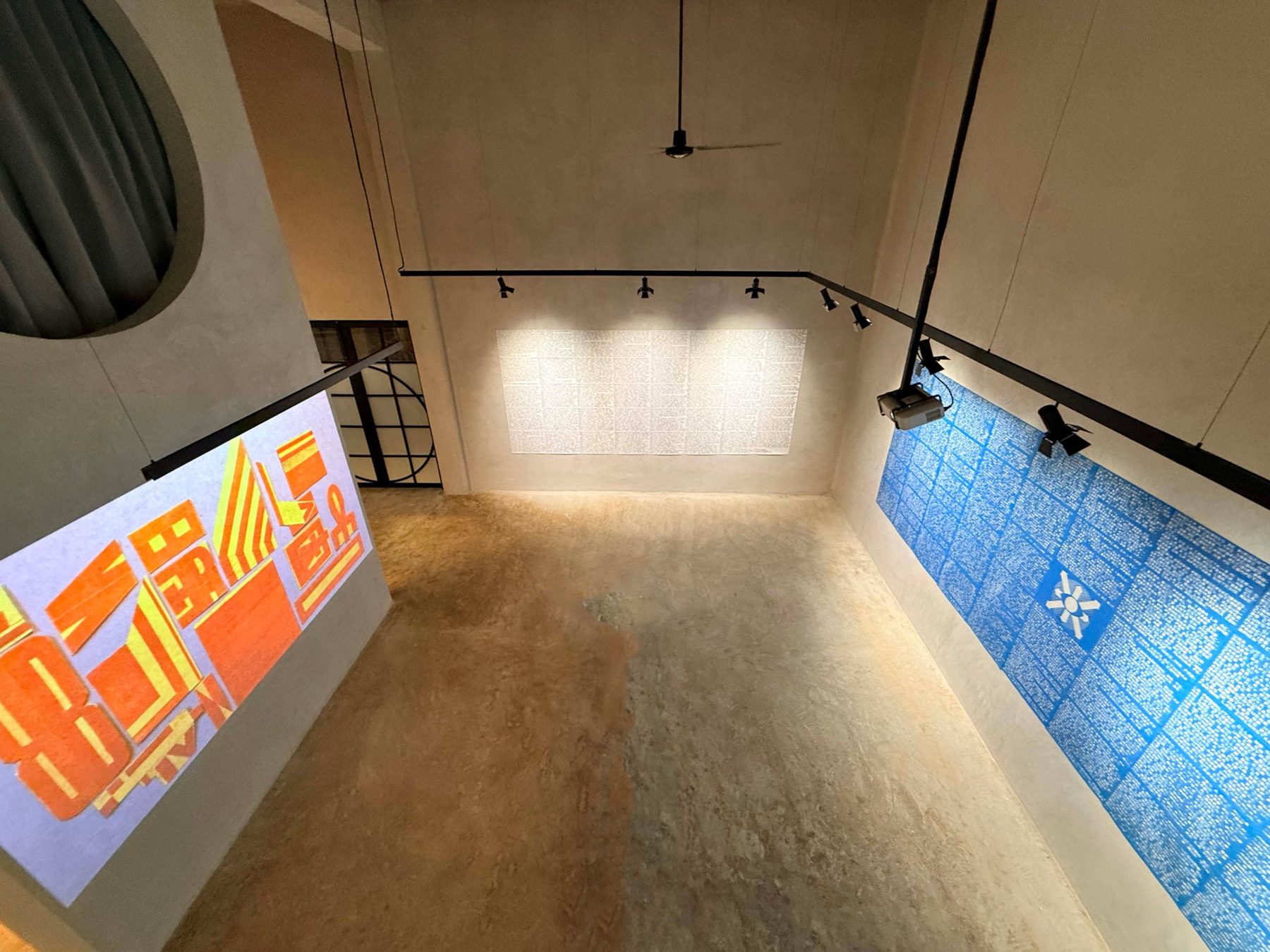
Villa Marista appears time and again in Hamlet’s accounts. The building obsessed him because of its history of repression against artists and intellectuals, and it was already a recurring reference in his work. In a series devoted to repressive institutions, he reconstructs the floor plans of these buildings and turns them into stencils that he reproduces on walls. Long before he was imprisoned there, Hamlet had already researched and depicted the site. In the end, he found himself inside.
Mi decisión de irme nuevamente de Cuba estuvo marcada por una conversación sobre la salida de mis obras. Una exposición que había presentado en La Habana debía viajar a Los Ángeles y necesitaba los permisos correspondientes. El funcionario con quien hablé me hizo saber que conocía mis declaraciones públicas y mis posiciones políticas. Me permitirían sacar las obras esa vez. La advertencia sobre lo que podía suceder después quedó en el aire. Entendí que la continuidad de mi trabajo podía quedar condicionada a mi silencio. Me fui a México, desde donde escribo este texto.
Hamlet había participado activamente en las campañas para visibilizar el encarcelamiento de otros artistas y exigir su liberación. Ahora le tocaba vivirlo en carne propia: estaba preso en Villa Marista. Amigos, artistas e instituciones nos movilizamos para denunciar su detención y reclamar su libertad, como él había hecho antes por otros.
Villa Marista aparece una y otra vez en los relatos de Hamlet. El edificio le obsesionaba por su historial de represión contra artistas e intelectuales y ya era una referencia recurrente en su trabajo. En una serie dedicada a instituciones represivas, reconstruye las plantas de estos edificios y las convierte en esténciles que reproduce en paredes. Antes de estar preso allí, Hamlet ya había investigado y representado aquel lugar. Finalmente terminó dentro.
The core of Mea Culpa is made up of four stencil works built from statements by Aníbal Escalante, Heberto Padilla, Arnaldo Ochoa Sánchez and Antonio de la Guardia. Their paths were very different: a communist leader, a poet and two high-ranking officers who took part in the revolutionary project and ended up punished by it. Hamlet brings them together at the moment when, under coercion, they are forced to accuse themselves publicly. Self-incrimination thus becomes a method of repression that uses the individual’s own words to destroy his biography.
Hamlet refers to these works as “text-portraits.” He seeks to understand what happens to a person when they are compelled to renounce their past and justify their own punishment. The portrait is made of the words with which they accuse themselves, shot through with pressure, fear and the possibility that repentance might save them.
Arnaldo Ochoa Sánchez was one of Cuba’s most decorated generals and had received the title of Hero of the Republic. In 1989, accused of corruption and drug trafficking, he acknowledged the charges before a court of honor and went so far as to propose his own death as punishment before sentence was passed. It is revealing that, while taking all the blame upon himself, he insisted on expressly exonerating Fidel Castro and the leadership of the government of any knowledge of those operations. Hamlet takes fragments of his spoken statements to compose another of his “text-portraits”: a man with a career of the highest revolutionary legitimacy who ends up justifying his own sentence and preserving, with his words, the authority of those who judge him.
El eje central de Mea Culpa está formado por cuatro textos realizados en esténcil, construidos a partir de declaraciones de Aníbal Escalante, Heberto Padilla, Arnaldo Ochoa Sánchez y Antonio de la Guardia. Sus trayectorias fueron muy diferentes: un dirigente comunista, un poeta y dos altos oficiales que participaron en el proyecto revolucionario y terminaron castigados por él. Hamlet los reúne en el momento en que, sometidos a coerción, son obligados a acusarse públicamente. La autoinculpación se convierte así en un método represivo que utiliza las palabras del propio individuo para destruir su biografía.
Hamlet llama a estas obras «textos retratos». Busca comprender qué ocurre con una persona cuando se ve obligada a renegar de su pasado y a justificar su propio castigo. El retrato se compone de las palabras con las que se acusa, atravesadas por la presión, el miedo y la posibilidad de que el arrepentimiento le permita salvarse.
Arnaldo Ochoa Sánchez era uno de los generales más condecorados de Cuba y había recibido el título de Héroe de la República. En 1989, acusado de corrupción y narcotráfico, reconoció los cargos ante un tribunal de honor y llegó a proponer su propia muerte como castigo antes de que se dictara sentencia. Resulta revelador que, mientras se atribuía toda la culpa, insistiera en exonerar expresamente a Fidel Castro y a la dirección del gobierno de cualquier conocimiento de aquellas operaciones. Hamlet toma fragmentos de sus intervenciones orales para componer otro de sus «textos retratos»: un hombre con una trayectoria de máxima legitimidad revolucionaria que termina justificando su propia condena y preservando, con sus palabras, la autoridad de quienes lo juzgan.
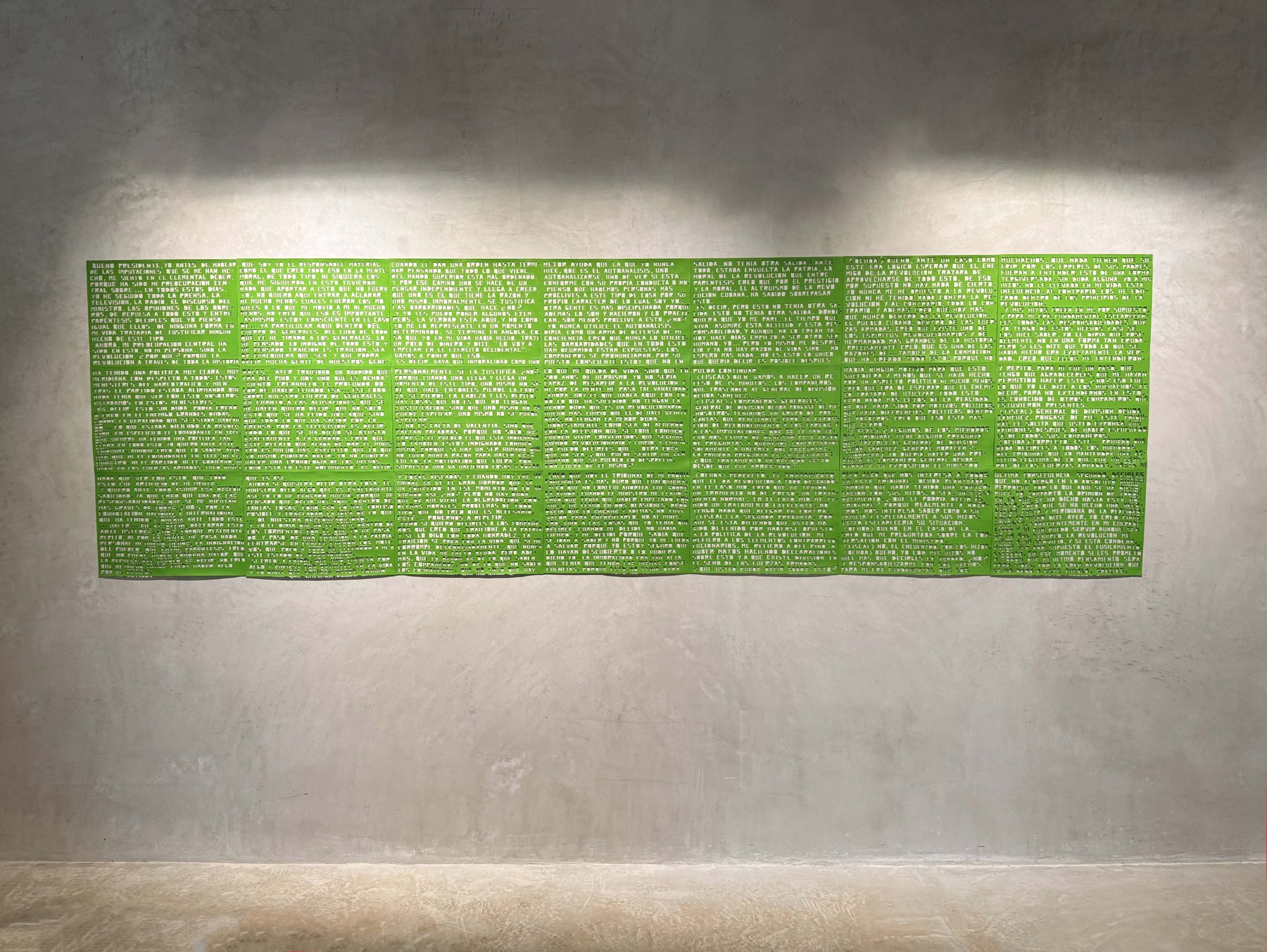
Antonio de la Guardia was a colonel in the Ministry of the Interior and headed a department in charge of carrying out commercial operations to get around the U.S. embargo. In 1989 he was tried for drug trafficking along with other officers in Causa 1, known as the Ochoa case. The charges included operations linked to the Medellín cartel. De la Guardia, who had worked for decades inside the revolutionary security apparatus, moved to the defendants’ bench and was executed by firing squad on 13 July of that year along with three other officers. Hamlet recovers his words of self-incrimination to examine that passage: a man from the repressive apparatus who ends up subjected to its procedures and publicly takes responsibility for his own downfall.
Antonio de la Guardia era coronel del Ministerio del Interior y dirigía un departamento encargado de realizar operaciones comerciales para sortear el embargo estadounidense. En 1989 fue procesado por narcotráfico junto con otros oficiales en la Causa 1, conocida como el caso Ochoa. Las acusaciones incluían operaciones vinculadas al cartel de Medellín. De la Guardia, que había trabajado durante décadas dentro del aparato de seguridad revolucionario, pasó a ocupar el banquillo de los acusados y fue fusilado el 13 de julio de aquel año junto con otros tres oficiales. Hamlet recupera sus palabras de autoinculpación para examinar ese tránsito: un hombre del aparato represivo que termina sometido a sus procedimientos y asume públicamente la responsabilidad de su propia caída.
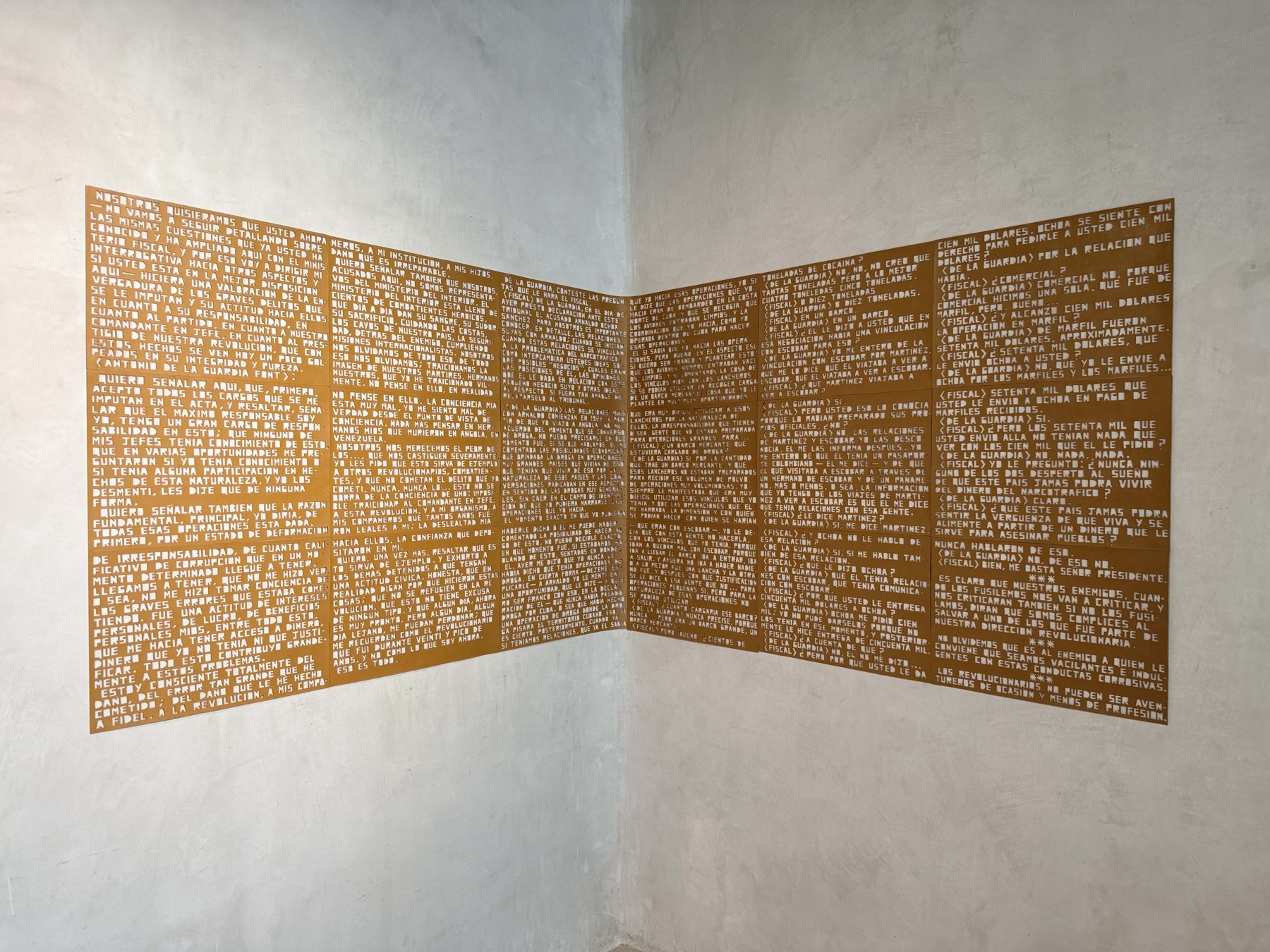
Hamlet remembers seeing the broadcasts of that trial as a child: the grave tone, the long sessions and the cartoons he was waiting to watch, pushed off the schedule. Years later, as an artist, he recovers the words of that scene. His memory points to something fundamental: the confession had spectators. It entered people’s homes and became part of the daily life of those who watched it.
Hamlet recuerda haber visto de niño las transmisiones de aquel proceso: el tono grave, las largas sesiones y los muñequitos que esperaba ver, desplazados de la programación. Años después, recupera como artista las palabras de aquella escena. Su recuerdo señala algo fundamental: la confesión tenía espectadores. Entraba en las casas y formaba parte de la vida cotidiana de quienes la veían.
Hamlet refers to these works as “text-portraits.” He seeks to understand what happens to a person when they are compelled to renounce their past and justify their own punishment.
Hamlet llama a estas obras «textos retratos». Busca comprender qué ocurre con una persona cuando se ve obligada a renegar de su pasado y a justificar su propio castigo.
Letters, newspapers, official publications and television circulated these statements. The punishment reached each individual’s public image and the memory of what they had done. Their own words helped replace a record of recognition with a story of errors, disloyalties and guilt.
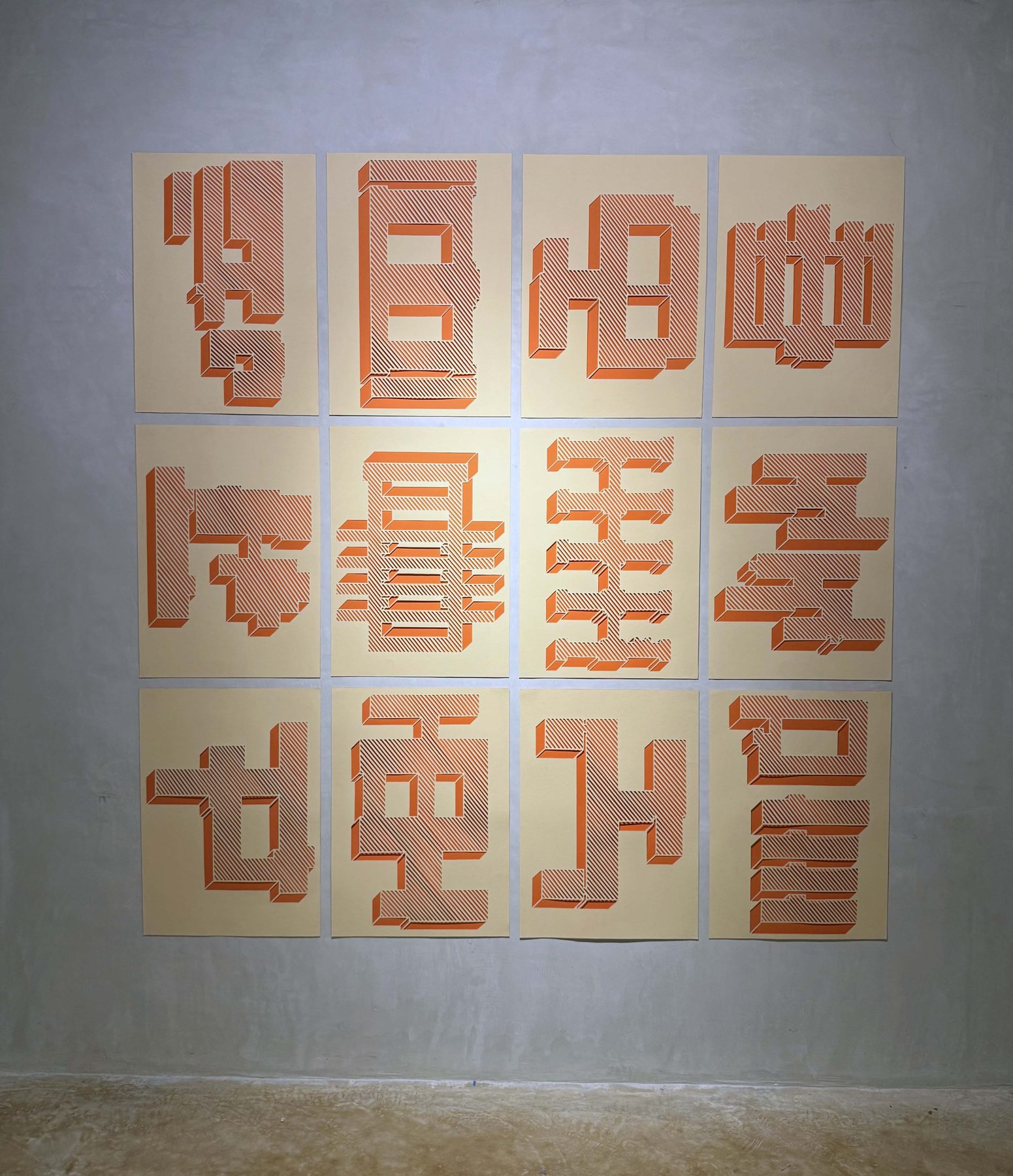
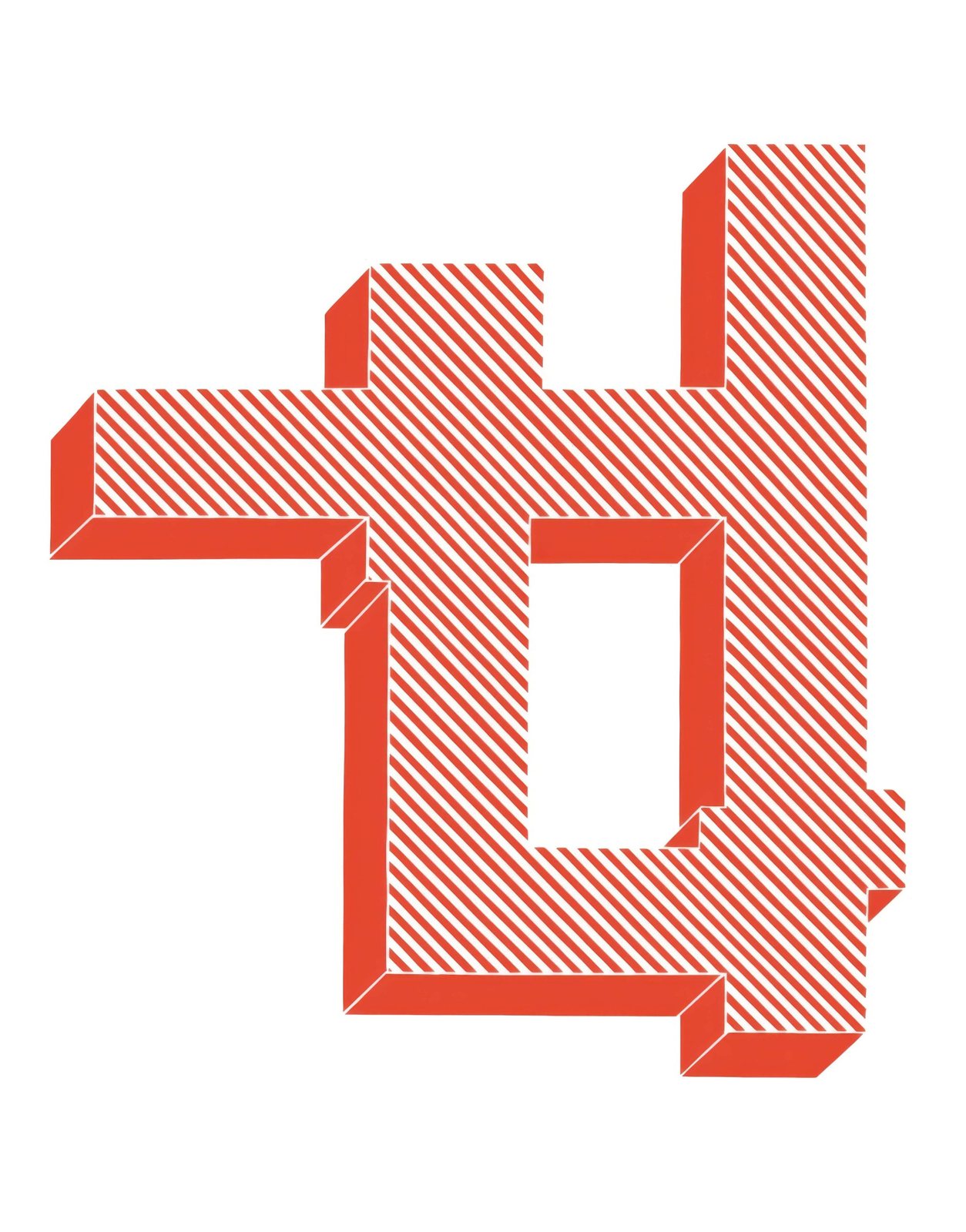
Hamlet has built his own working palette through an almost obsessive search in old magazines such as Bohemia and other Cuban publications. He digs through their pages, recovering and archiving texts, images, emblems, typefaces and graphic compositions. He is interested as much in the ideological content as in the forms that gave it presence and authority. That archive feeds his knowledge of revolutionary visual culture and provides the materials he works with: a repertoire of words and signs that he puts back into circulation to examine the history they helped build.
Hamlet finds these texts in publications or recovers them from audiovisual records. He selects them, transcribes them and cuts them to turn them into stencils. His intervention on the historical material is restrained and precise. The cut-out lets those words be reproduced on walls and circulate before new generations, but also before those who took part in or supported, amid revolutionary euphoria, those rituals of public condemnation.
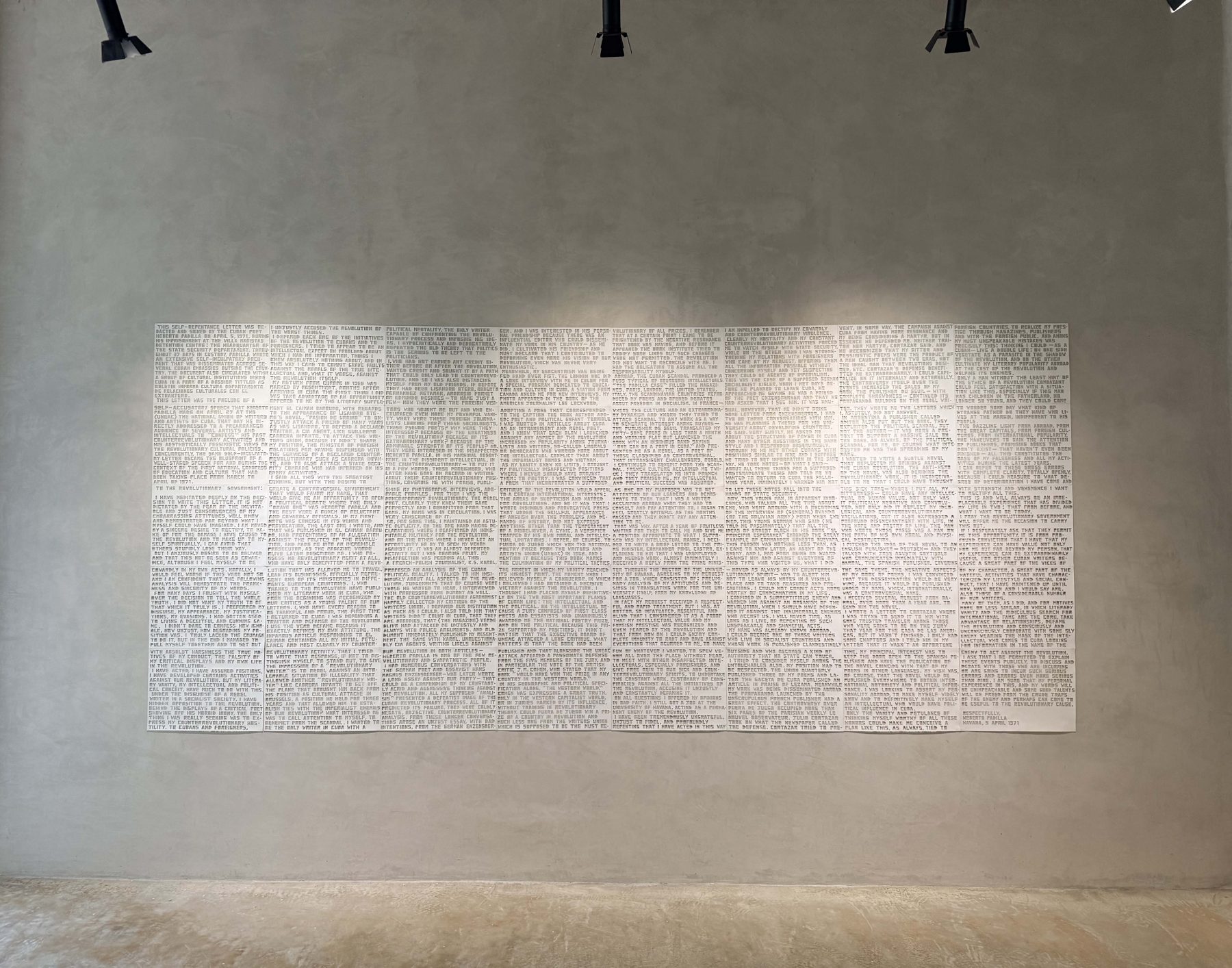
Heberto Padilla was a poet who, after initially supporting the Revolution, became a critical voice against its authoritarianism and the subjection of literary creation to political demands. His opinions and his work set him against the authorities, until his imprisonment in 1971, when he was subjected to interrogation, intimidation and pressure to incriminate himself. Hamlet recovers a letter of self-criticism written during that captivity and circulated in English in a bulletin intended for diplomatic circles. In it, the language of power enters the account the writer gives of himself: his opinions and his literary conduct become faults he must confess. The letter preceded his famous public confession before the Union of Writers and Artists of Cuba, where the poet accused himself and extended his accusations to other writers, including his wife.
Las cartas, los periódicos, las publicaciones oficiales y la televisión dieron circulación a estas declaraciones. El castigo alcanzaba la imagen pública de cada individuo y la memoria de lo que había hecho. Sus propias palabras contribuían a sustituir una trayectoria de reconocimiento por un relato de errores, deslealtades y culpas.
Hamlet ha construido su propia paleta de trabajo mediante una búsqueda casi obsesiva en revistas antiguas como Bohemia y otras publicaciones cubanas. Excava en sus páginas, recupera y archiva textos, imágenes, emblemas, tipografías y composiciones gráficas. Le interesan tanto los contenidos ideológicos como las formas que les dieron presencia y autoridad. Ese archivo alimenta su conocimiento de la cultura visual revolucionaria y le proporciona los materiales con los que trabaja: un repertorio de palabras y signos que vuelve a poner en circulación para examinar la historia que contribuyeron a construir.
Hamlet encuentra esos textos en publicaciones o los recupera de registros audiovisuales. Los selecciona, los transcribe y los corta para convertirlos en esténciles. La intervención sobre el material histórico es contenida y precisa. El calado permite reproducir aquellas palabras en las paredes y hacerlas circular ante nuevas generaciones, pero también ante quienes protagonizaron o respaldaron, en medio de la euforia revolucionaria, aquellos rituales de condena pública.
Heberto Padilla fue un poeta que, tras apoyar inicialmente la Revolución, se convirtió en una voz crítica de su autoritarismo y del sometimiento de la creación literaria a las exigencias políticas. Sus opiniones y su obra lo enfrentaron con las autoridades, hasta su encarcelamiento en 1971, cuando fue sometido a interrogatorios, intimidación y presiones para autoinculparse. Hamlet recupera una carta de autocrítica escrita durante aquel cautiverio y difundida en inglés en un boletín destinado al ámbito diplomático. En ella, el lenguaje del poder entra en el relato que el escritor hace de sí mismo: sus opiniones y su conducta literaria se convierten en faltas que debe reconocer. La carta precede a su célebre confesión pública ante la Unión de Escritores y Artistas de Cuba, donde el poeta se acusa y extiende sus acusaciones a otros escritores, incluida su esposa.
Aníbal Escalante had belonged to the Cuban communist leadership since before the revolutionary triumph. In 1968 he was tried and imprisoned in the so-called microfaction case, accused of organizing a current within the political apparatus itself. Hamlet recovers his letter of self-criticism, in which a former leader ends up publicly renouncing his positions. The document shows how the demand for obedience could also reach those who had helped build the system: a difference within its ranks became a fault that had to be confessed.
Aníbal Escalante pertenecía a la dirigencia comunista cubana desde antes del triunfo revolucionario. En 1968 fue procesado y encarcelado en el llamado caso de la microfracción, acusado de organizar una corriente dentro del propio aparato político. Hamlet recupera su carta de autocrítica, en la que un antiguo dirigente termina renegando públicamente de sus posiciones. El documento muestra cómo la exigencia de obediencia podía alcanzar también a quienes habían contribuido a construir el sistema: una diferencia dentro de sus filas se convertía en una falta que debía confesarse.
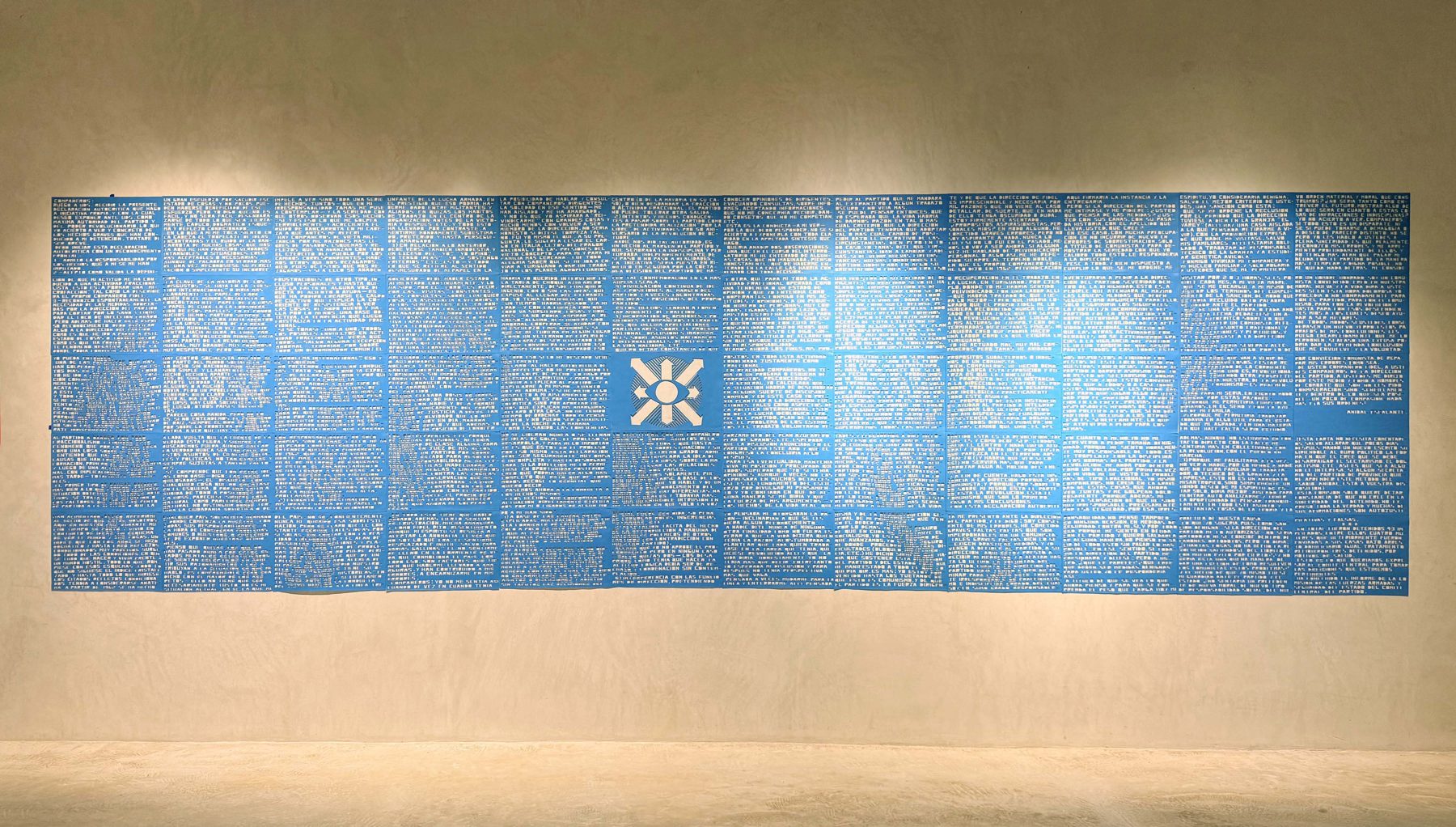
Hamlet’s sharpness lies in that surgical selection: he finds in the archive the words capable of revealing the violence and dehumanization that revolutionary discourse itself sought to justify. It is enough to recover them and present them in the present for them to take on a disturbing force. By turning them into stencils, he also opens a path of public circulation close to graffiti, outside the official publications that once spread them. On the wall, these words become available to other readers and other interpretations, beyond the control of the institution that produced them.
This exhibition at Galería 25 is presented alongside the first Yucatán Biennial, which places the vocal at the center of its proposal. Hamlet’s works take us to an extreme condition of the word: a person’s voice can be used to destroy their own authority. Speaking in public, having a platform or being heard by an entire country can be part of subjugation.
The relationship between his life and these works became brutally close during his imprisonment at Villa Marista. As he told me after his release, during those months he was subjected to intense psychological torture. His interrogators wanted him to confess that he had received money for his ideas and actions. They wanted to turn his critical thinking into paid activity, assign him a patron and thus deny him the capacity to think and act out of his own conviction.
La agudeza de Hamlet radica en esa selección quirúrgica: encuentra en el archivo las palabras capaces de revelar la violencia y la deshumanización que el propio discurso revolucionario pretendía justificar. Basta recuperarlas y presentarlas en el presente para que adquieran una fuerza perturbadora. Al convertirlas en esténciles, les abre además una vía de circulación pública próxima al grafiti, al margen de las publicaciones oficiales que antes las difundieron. En la pared, esas palabras quedan disponibles para otros lectores y otras interpretaciones, fuera del control de la institución que les dio origen.
Esta exposición en Galería 25 se presenta en paralelo a la primera Bienal de Yucatán, que sitúa lo vocal en el centro de su propuesta. Las obras de Hamlet nos llevan a una condición extrema de la palabra: la voz de una persona puede ser utilizada para destruir su propia autoridad. Hablar en público, disponer de una tribuna o ser escuchado por todo un país puede formar parte del sometimiento.
La relación entre su vida y estas obras adquirió una cercanía brutal durante su encarcelamiento en Villa Marista. Según me contó después de salir, durante aquellos meses fue sometido a una intensa tortura psicológica. Los interrogadores buscaban que confesara haber recibido dinero por sus ideas y sus acciones. Querían convertir su pensamiento crítico en una actividad pagada, atribuirle un patrón y negarle así la capacidad de pensar y actuar por convicción propia.
Villa Marista appears time and again in Hamlet’s accounts. […] Long before he was imprisoned there, Hamlet had already researched and depicted the site. In the end, he found himself inside.
Villa Marista aparece una y otra vez en los relatos de Hamlet. […] Antes de estar preso allí, Hamlet ya había investigado y representado aquel lugar. Finalmente terminó dentro.
I recognized in that account the mechanism Hamlet had found so many times in his research: getting a person to utter the words that would discredit them. In his case, the confession was meant to present as a mercenary someone I knew to be a man of humble origins, free in his thinking and of an integrity I can vouch for. As he told me, they did not get that confession. His release from prison came with exile.
As we prepare Mea Culpa, Hamlet lives in a refugee camp in Germany and awaits a response to his asylum application. The decisions of the State have shaped his life, from confinement to the place where he can work today. The documents he selects and turns into stencils belong to a history that ended up catching up with him. On the walls he puts the confessions of others back into circulation; at Villa Marista they tried to wring out his own.
Reconocí en ese relato el mecanismo que Hamlet había encontrado tantas veces en sus investigaciones: conseguir que una persona pronunciara las palabras que permitirían desautorizarla. En su caso, la confesión debía presentar como mercenario a alguien a quien yo conocía como un hombre de origen humilde, libre de pensamiento y de una integridad que me consta. Según me relató, no consiguieron aquella confesión. Su salida de prisión llegó acompañada del destierro.
Mientras preparamos Mea Culpa, Hamlet vive en un campo de refugiados en Alemania y espera una respuesta a su solicitud de asilo. Las decisiones del Estado han dado forma a su vida, desde el encierro hasta el lugar donde hoy puede trabajar. Los documentos que selecciona y convierte en esténciles pertenecen a una historia que terminó por alcanzarlo. En las paredes vuelve a poner en circulación las confesiones de otros; en Villa Marista intentaron arrancarle la suya.