Past exhibitExposición pasada
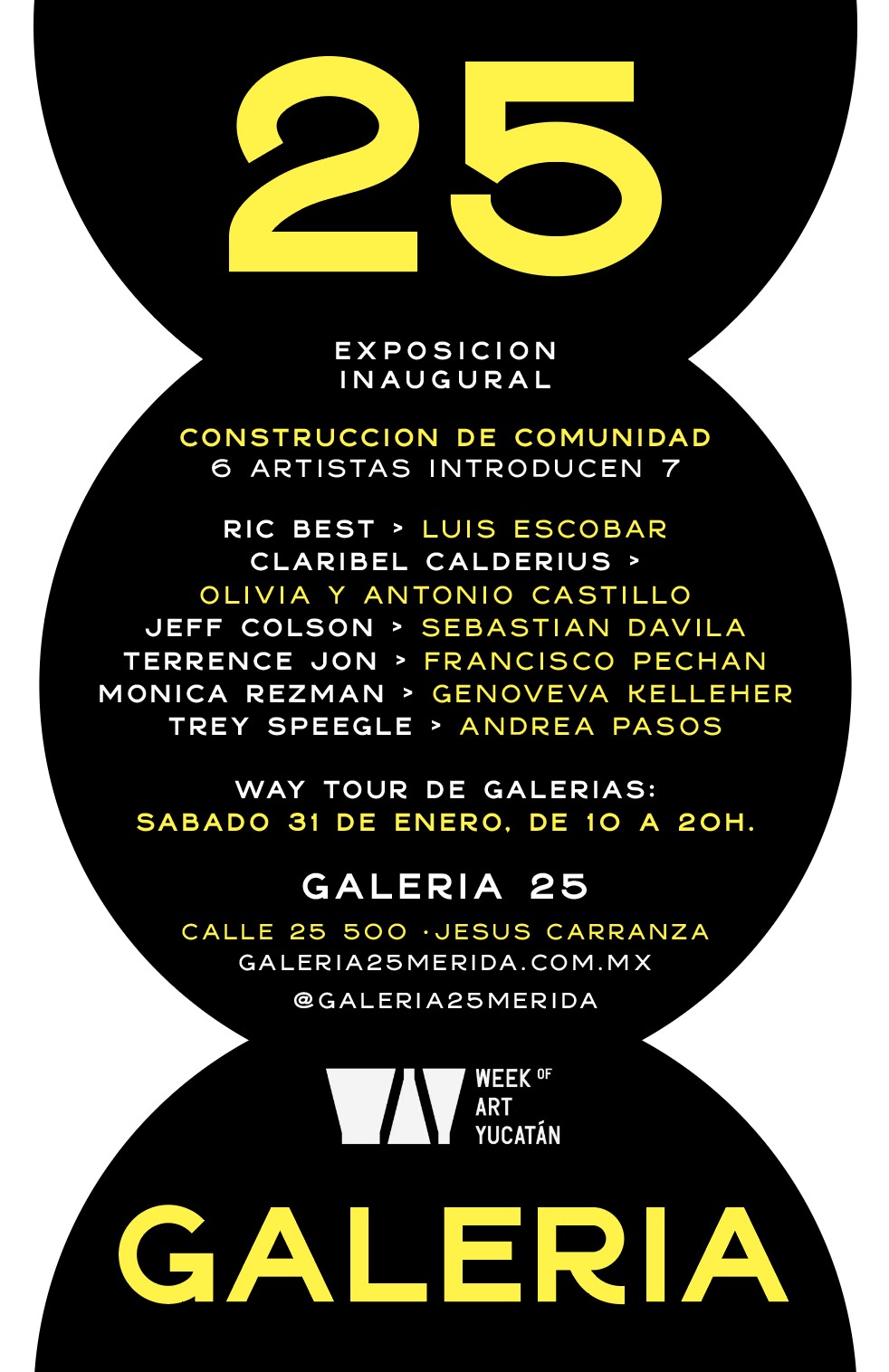
Group exhibit · 6 artists introduce 7Exposición colectiva · 6 artistas presentan a 7
Construcción de Comunidad
- DatesFechas
- 29 January – 16 March 202629 de enero – 16 de marzo 2026
- OpeningInauguración
- Thursday 29 January 2026, 5–8 pmJueves 29 de enero 2026, 17–20 h
- Part ofParte de
- Week of Art Yucatán
About the exhibitSobre la exposición
Six artists from the U.S. and Canada, living and working in Mérida, asked seven local artists to either collaborate with them and/or to show works alongside each other.
The idea for this exhibit, the impetus for this gallery, and WAY, came out of a desire to create a bridge within the creative community in Mérida, connecting like-minded creators, across generations and cultures, with the public. The artists in this show range from age 16 to 67.
The first exhibition at Galería 25, being held during the very first Week of Art Yucatán, was perfect synchronicity.
Seis artistas de Estados Unidos y Canadá, residentes y trabajadores de Mérida, invitaron a siete artistas locales a colaborar con ellos o a mostrar sus obras en conjunto.
La idea de esta exposición, el impulso de esta galería y de WAY, surgió del deseo de crear un puente dentro de la comunidad creativa de Mérida, conectando a creadores con ideas afines, de distintas generaciones y culturas, con el público. Los artistas de esta exposición tienen entre 16 y 67 años.
La primera exposición en la Galería 25, celebrada durante la primera Week of Art Yucatán, fue una sincronía perfecta.
Each artist wrote about the other. The pairs:Cada artista escribió sobre el otro. Las parejas:
Trey Speegle & Andrea Pasos
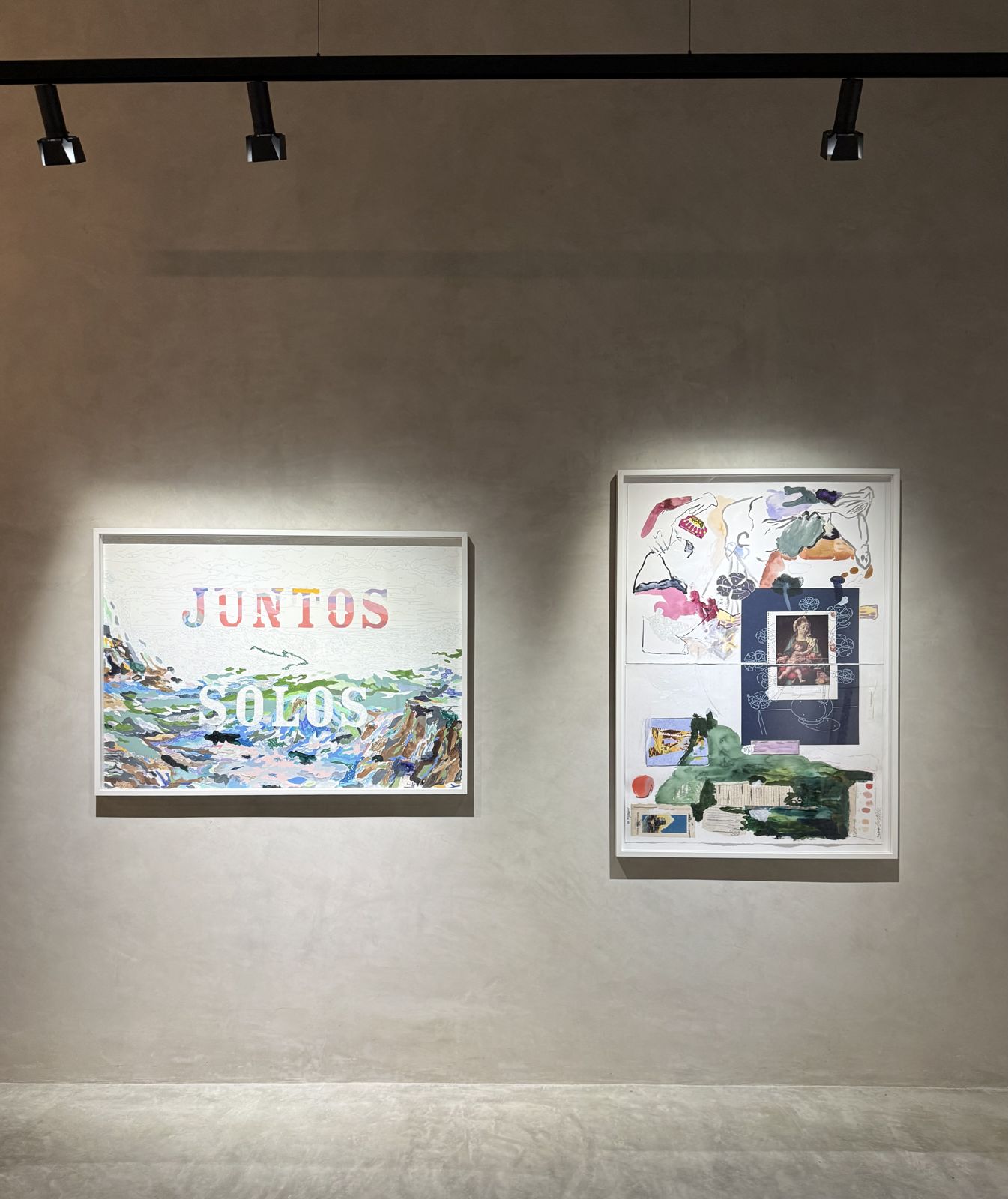
Trey Speegle
When I first saw the fresh spontaneous line, color choices and freedom in Andrea’s work, it was really inspiring and exciting to me. I approached her about a possible collaboration and getting to know her confirmed my initial appreciation for the choices in her work, her openness and also her kindness.
After we started working together, I learned that she also teaches art to all ages. One thing I know from having taught myself is that you don’t understand what it is that you can do until you try to explain it to someone else. She understands how to communicate her process.
My work uses vintage paint-by-number and words, so that was a starting point. We talked about what we wanted to create in terms of sizes, materials etc., all along the way. (WAY!) We also respected each other’s choices and just did stuff in the moment. I think we worked well together, negotiating what to do and how to do it, and maybe most importantly, when to stop.
Cuando vi por primera vez la línea fresca y espontánea, la elección de colores y la libertad en la obra de Andrea, me sentí realmente inspirado y emocionado. La contacté para una posible colaboración y conocerla confirmó mi apreciación inicial por las decisiones de su trabajo, su franqueza y su amabilidad.
Después de empezar a trabajar juntos, descubrí que también imparte clases de arte para todas las edades. Algo que sé por experiencia propia es que uno no entiende lo que puede hacer hasta que intenta explicárselo a alguien. Ella sabe cómo comunicar su proceso. Mi obra utiliza pintura por números antigua y palabras, así que ese fue un punto de partida.
Hablamos sobre lo que queríamos crear en cuanto a tamaños, materiales, etc., durante todo el proceso. (¡WAY!) También respetamos las decisiones de cada uno y simplemente hicimos las cosas en el momento. Creo que trabajamos bien juntos, negociando qué hacer y cómo hacerlo, y quizás lo más importante, cuándo parar.
Andrea Pasos
When I first visited Trey’s studio and saw his work, what I appreciated was his sense of humor. His work blends a light, playful quality that confronts you in a much deeper way. The paint-by-number structure was especially engaging. I often wondered whether to follow the rules or not, when they worked, and when there was room to change the game. This created a lot of freedom, since we had a solid foundation to work from.
In terms of color, everything developed very naturally. The print of Joos van Cleve’s Madonna with Carnation established a color palette that influenced and resonated throughout the other choices we made. I think we share a taste for chance. Sometimes we talked during the process, but we also had the freedom to follow our own instincts.
Occasionally, Trey would choose a color or make a mark spontaneously, and for me that is the most exciting part: seeing a different perspective and responding with another gesture, or simply appreciating it. It is incredibly enriching as an artist to step out of your own bubble and witness the other person exactly as they are.
Cuando visité por primera vez el estudio de Trey y vi su obra, lo que más aprecié fue su sentido del humor. Su obra combina una cualidad ligera y lúdica que te conecta de una manera mucho más profunda. La estructura de pintar por números era especialmente cautivadora. A menudo me preguntaba si debía seguir las reglas o no, cuándo funcionaban y cuándo había margen para cambiar las reglas. Esto nos dio mucha libertad, ya que teníamos una base sólida sobre la que trabajar.
En cuanto al color, todo se desarrolló de forma muy natural. La impresión de Madonna with Carnation de Joos van Cleve estableció una paleta de colores que influyó y resonó en las demás decisiones que tomamos. Creo que compartimos el gusto por la casualidad. A veces hablábamos durante el proceso, pero también teníamos la libertad de seguir nuestros propios instintos.
De vez en cuando, Trey elegía un color o dejaba una marca espontáneamente, y para mí esa es la parte más emocionante: ver una perspectiva diferente y responder con otro gesto, o simplemente apreciarla. Es increíblemente enriquecedor como artista salir de tu propia burbuja y observar a la otra persona tal como es.
In the exhibitEn la exposición
Terrence Jon & Francisco Pechán
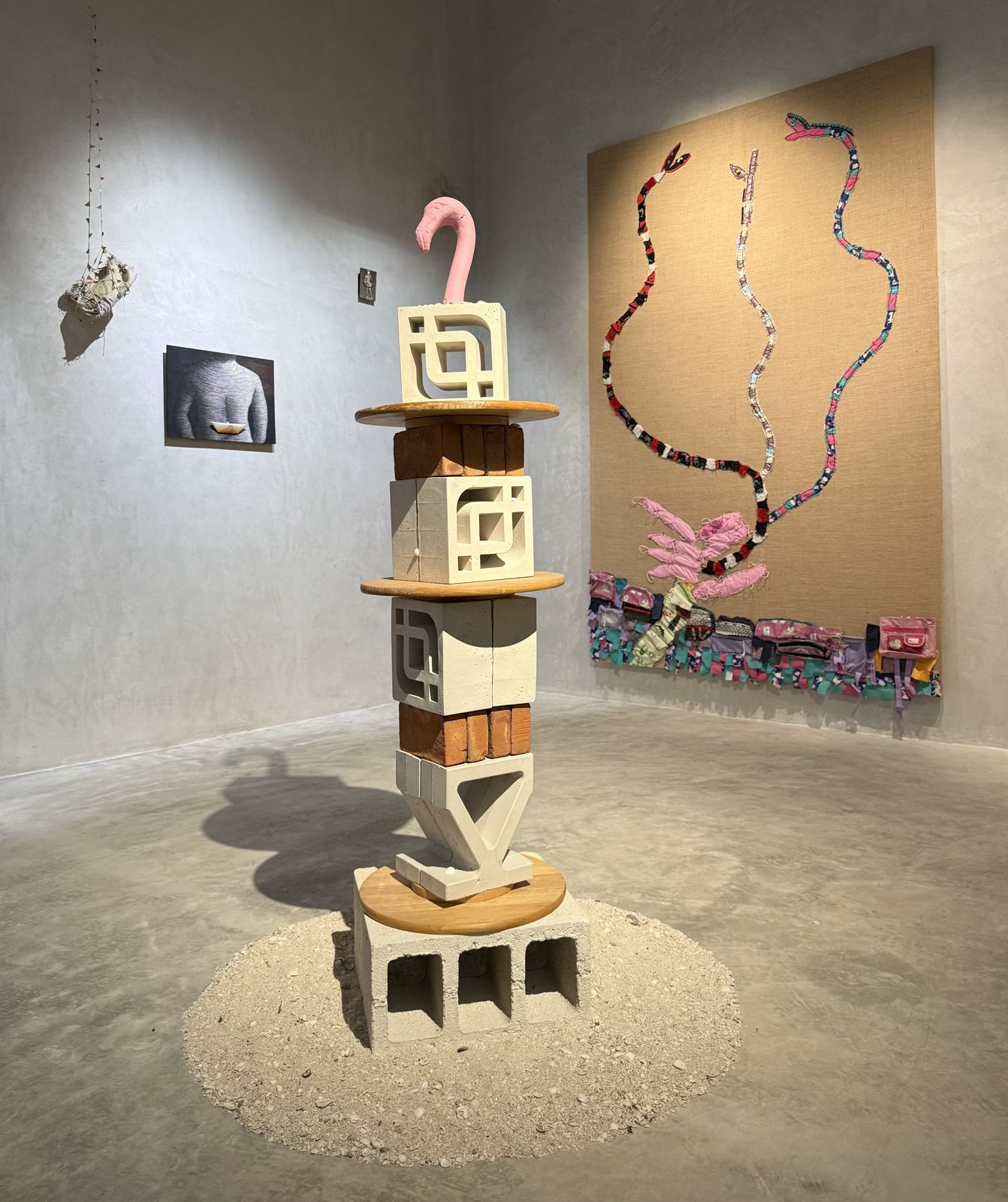
Terrence Jon
I think I saw enough differences, then also common ground in Francisco’s work, that it seemed intriguing, a pairing that building a bridge to each other’s work would be fun to explore: familiar themes but far enough away aesthetically to make some discoveries and fuse elements together. I liked the tactile, textured quality of his ceramics; the clay works almost looked like they were dug up from the earth, yet still retained a painterly quality.
Francisco’s color palette was organic and natural, branching off into figurative, lush, whimsical areas. I like that link to natural spiritual worlds that played with kitschness, like a rainbow unicorn or horned demonic creature, with a gaudy streak. He explores the natural realm in an occult way, thoughtful and playful all at once.
That kind of give and take, a gestural battle to add just the right amount of elements, creates a provocative conversation, a dialogue with a fellow artist with Mexican genetics, raised in a very different region of Mexico. We could create some beauty and tension, with an underlying conceptual story that asks questions about nature versus the gentrification of our environment.
I imagined this shared collaboration with Francisco could make an interesting experience: exploring materials together, building community together, traversing nature versus manmade, an unexpected recipe of ingredients, then sharing a meal, exuberance pared back, spicy, indulging yet perhaps trying not to overeat together. Still feeling a little hunger after the meal.
Temas familiares, pero lo suficientemente distantes en lo estético como para permitir descubrimientos y la fusión de elementos. Me atrajo la cualidad táctil y texturizada de sus cerámicas: las piezas de barro parecían casi desenterradas de la tierra, y aun así conservaban una calidad pictórica.
La paleta de color de Francisco es orgánica y natural, y se ramifica hacia lo figurativo, lo exuberante y lo lúdico. Me interesa esa conexión con mundos naturales y espirituales, donde juega con lo kitsch: como un unicornio arcoíris o una criatura demoníaca cornuda, con un toque deliberadamente estridente. Explora el reino natural desde un lugar casi ocultista, reflexivo y juguetón al mismo tiempo.
Ese intercambio, una especie de batalla gestual para añadir la cantidad justa de elementos, es lo que puede generar una conversación provocadora, un diálogo entre artistas con genética mexicana, pero criados en regiones muy distintas de México. Podíamos crear belleza y tensión, con una historia conceptual de fondo que planteara preguntas sobre la naturaleza frente a la gentrificación de nuestro entorno.
Imaginé esta colaboración compartida con Francisco como una experiencia interesante: explorar materiales juntos, construir comunidad, transitar entre lo natural y lo artificial. Una receta inesperada de ingredientes; luego compartir una comida, exuberante pero contenida, picante, indulgente, aunque tratando de no excedernos. Quedarse todavía con un poco de hambre después del plato.
Francisco Pechán
In Terrence’s work, one can sense the reflection of the space he inhabits. He asks himself: why is this the way it is? And, free from pretension, he does not seek an immediate answer; instead, he wanders, observes, and analyzes, later translating that process into forms and colors that blur and gradually fade away.
The way he tends to construct a piece resembles the flow and tributaries of a river: never still, never the same, splitting apart and then finding itself again. This shifting quality was one of the aspects that most drew me to our collaborative work: to experiment, to play, to build and dismantle until reaching the precise point of balance between our ideas and a shared visual concept.
Terrence is an artist who experiments and, at the same time, encourages experimentation in others. He never stops learning, yet he is also constantly teaching, revealing through his work the way he observes the world.
En la obra de Terrence se percibe el reflejo del espacio que habita. Se pregunta a sí mismo: ¿por qué esto es así? Y, lejos de las pretensiones, no busca una respuesta inmediata; recorre, observa y analiza para luego traducir ese proceso en formas y colores que se difuminan y se desvanecen.
La manera en que suele construir una pieza se asemeja al flujo y los afluentes de un río: nunca está quieto, nunca es el mismo, se divide y luego se encuentra de nuevo. Esa cualidad cambiante fue uno de los aspectos que más me atrajo para la creación de nuestra obra en colaboración: experimentar, jugar, construir y deconstruir hasta hallar el punto preciso, el equilibrio entre nuestras ideas y el concepto visual compartido.
Terrence es un artista que experimenta y que, al mismo tiempo, promueve la experimentación del otro. Nunca deja de aprender, pero también está constantemente enseñando, revelando a través de su obra la manera en que observa el mundo.
In the exhibitEn la exposición
Ric Best & Luis Escobar
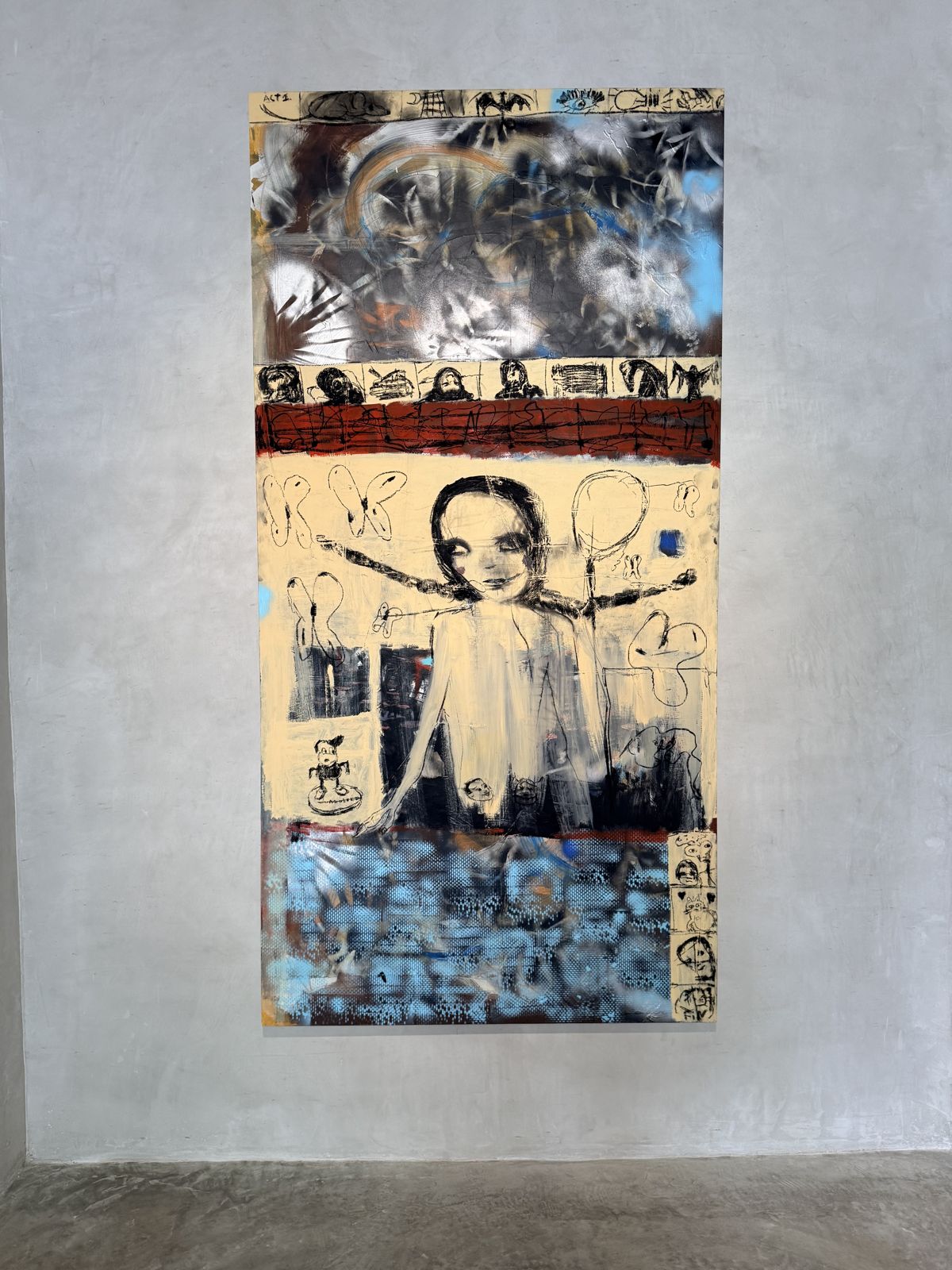
Ric Best
Luis is one of my favorite artists; I love his work. We’re both passionate about comics, science fiction, and, above all, storytelling. I’m an abstract expressionist. I like to think of him as a surrealist. I create melancholic and meditative works based on memory and, therefore, on fiction.
Luis’s work seems to me like a fragment of a much larger story, a moment in memory where the before and after can only be guessed at… imagined. The Adventure of Clare and Her Mouse is a collaboration of narrative, memory, the strange and the beautiful. It was a joy to work with him.
¡Uno de mis artistas favoritos es Luis Escobar! Me encanta su obra. A ambos nos apasionan los cómics, la ciencia ficción y, sobre todo, la narrativa. Yo soy expresionista abstracto. Me gusta pensar en él como surrealista. Creo obras melancólicas y meditativas basadas en la memoria y, por lo tanto, en la ficción.
La obra de Luis me parece un fragmento de una historia mucho más grande, un momento en la memoria donde el antes y el después solo se pueden adivinar… imaginar. Nuestra obra colectiva, La aventura de Clare y su ratón, es una colaboración entre la narrativa, la memoria, lo extraño y lo bello. ¡Fue un placer trabajar con él!
Luis Escobar
Ric is a friend and a great artist. We share a passion for comics and the work of Robert Crumb, fanzines, graphic narrative, and the strange world of science fiction. I love his abstract expressionist work and his ability to create sensations, seemingly with just a few strokes, which I greatly appreciate. Personally, I find his paintings outstanding, and they convey different sensations to me through the use of color and mixed media.
The Adventure of Clare and Her Mouse: this was a collaboration that I found very fun to work on, using our shared taste for narrative to create a strange story. It was a pleasure working with Ric; he is a great friend, although I must confess that there is another collaborator in the piece: Daisy, his little cat.
Ric es un amigo y un gran artista. Compartimos la pasión por los cómics y la obra de Robert Crumb, los fanzines, la narrativa gráfica y el peculiar mundo de la ciencia ficción. Me encanta su obra expresionista abstracta y su capacidad para crear sensaciones, aparentemente con solo unas pocas pinceladas, algo que aprecio enormemente. Personalmente, sus pinturas me parecen excepcionales, y me transmiten diferentes sensaciones mediante el uso del color y la técnica mixta.
La aventura de Clare y su ratón: esta colaboración me resultó muy divertida, ya que aprovechamos nuestro gusto compartido por la narrativa para crear una historia peculiar. Fue un placer trabajar con Ric; es un gran amigo, aunque debo confesar que hay otra colaboradora en la pieza: Daisy, su gatita.
In the exhibitEn la exposición
Jeff Colson & Sebastián Dávila
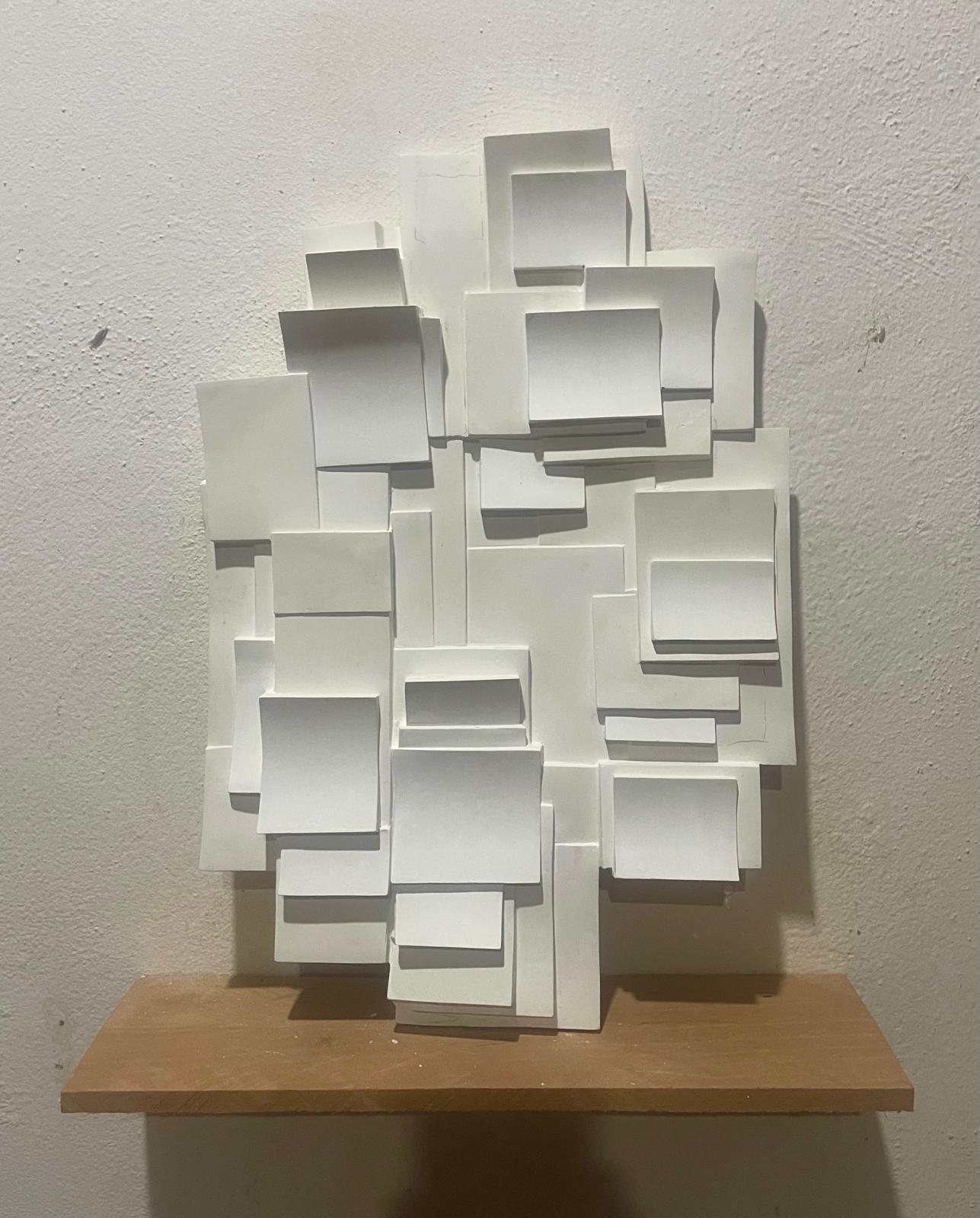
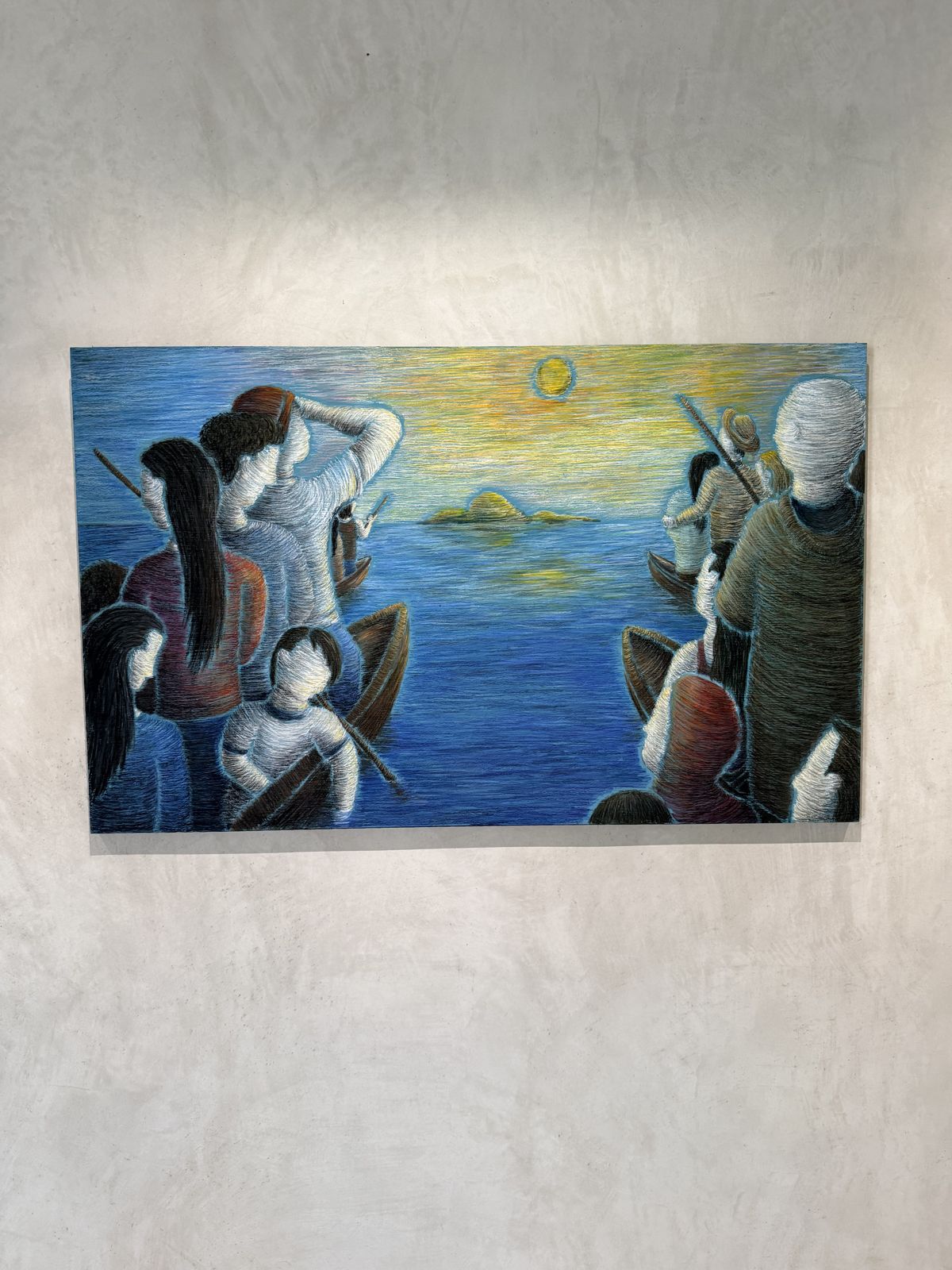
Jeff Colson
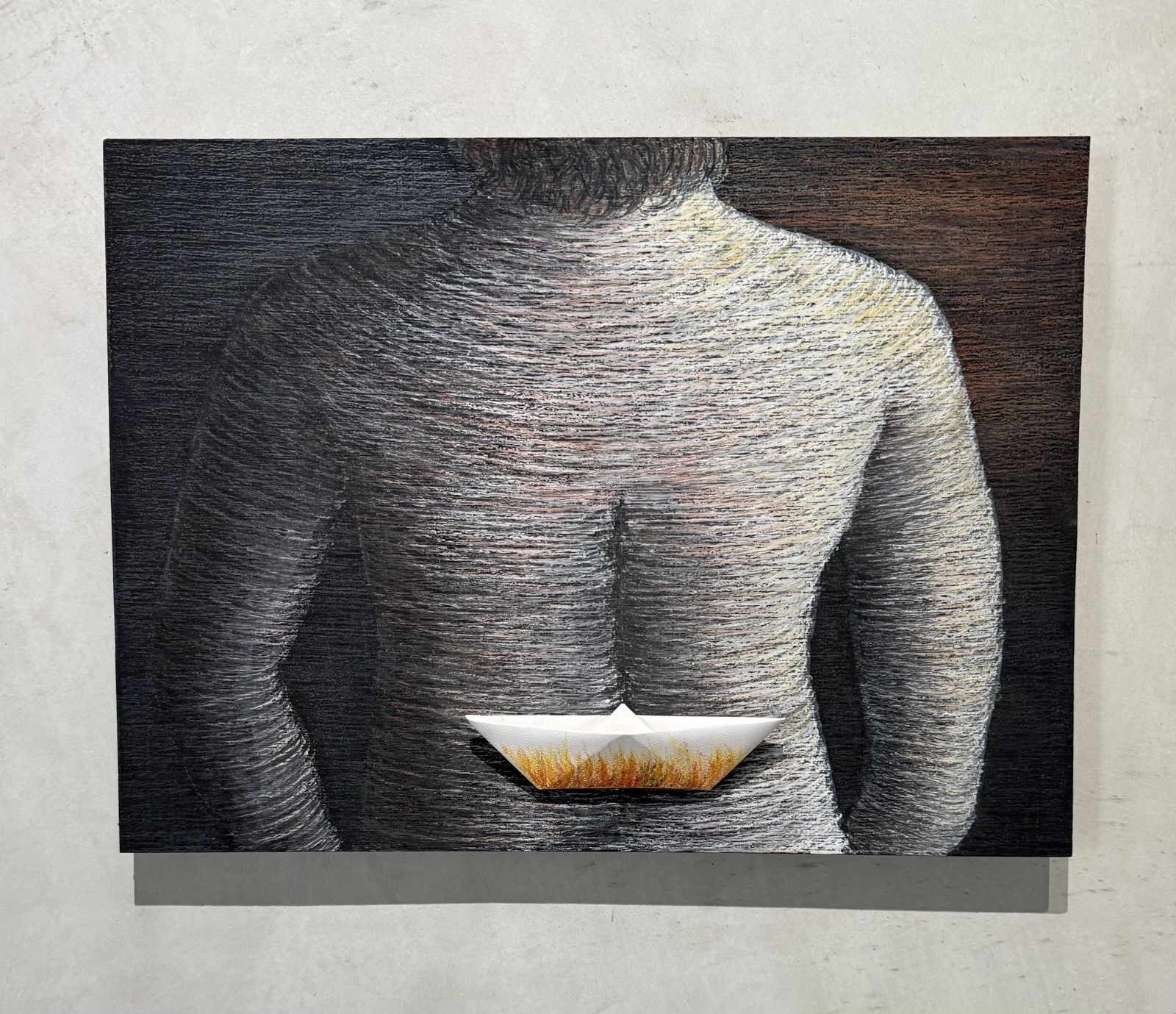
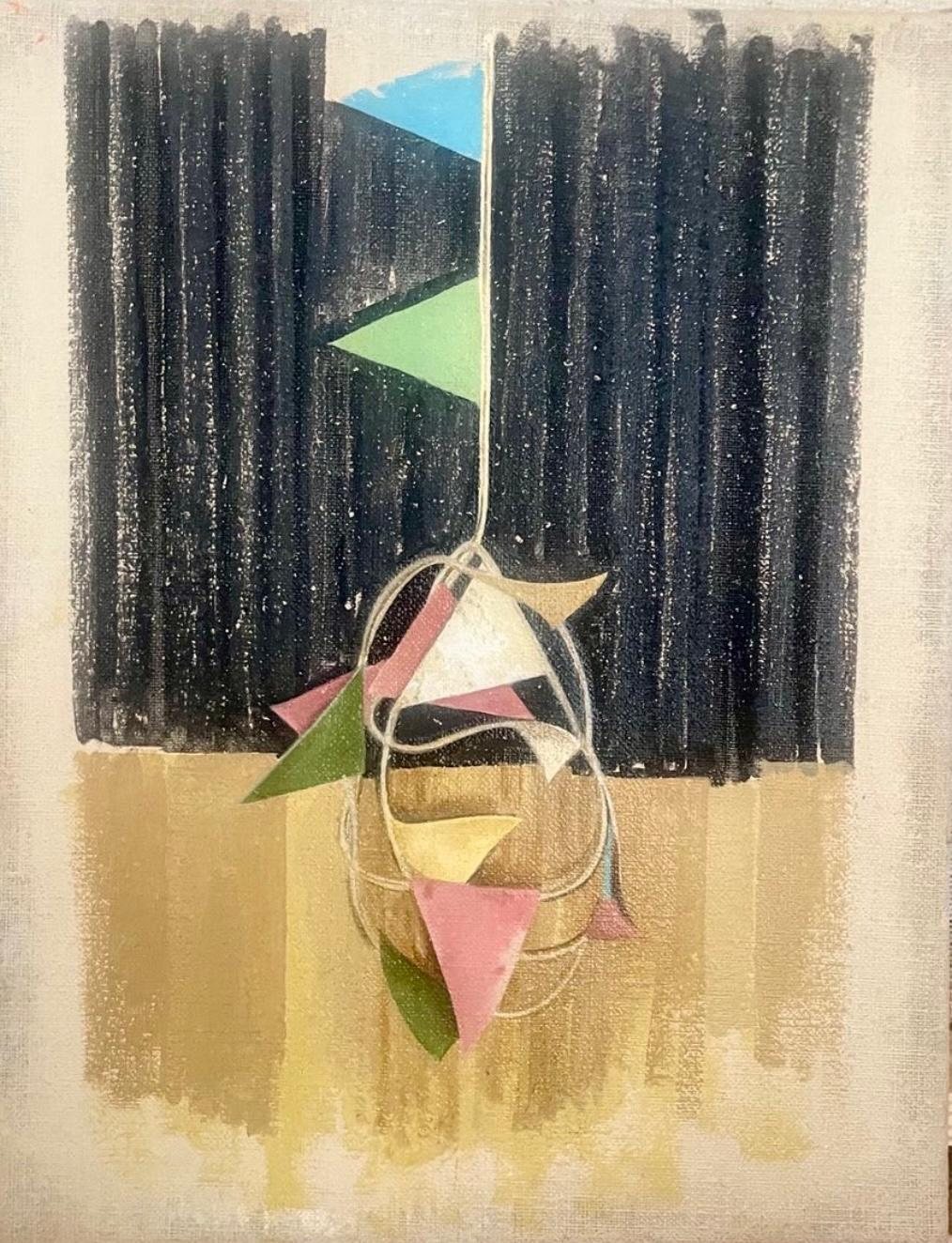
I understand in seeing Sebastián’s paintings a formal connection with Morandi, the imagery distilled down to a few fundamental elements, like a still life. But each figure and object is animated with a swirling energy, all existing within a dreamy atmospheric landscape.
One can’t help but assign a narrative to this tableau. But specifics are elusive. The faces blank, but intent, occupying this liminal space. It all has the feel of a fable or nursery tale. Childlike innocence and a gentle menace remind me of those alienating George Tooker paintings of subways and offices.
It’s all there, simultaneously idyllic and uncanny, sunny and foreboding.
Entiendo que al ver las pinturas de Sebastián se percibe una conexión formal con Morandi, con la imaginería destilada en unos pocos elementos fundamentales, como una naturaleza muerta. Pero cada figura y objeto, animado por una energía arremolinada, existe en un paisaje atmosférico y onírico.
Es inevitable asignarle una narrativa a este cuadro. Pero los detalles son esquivos. Los rostros, inexpresivos pero atentos, ocupan este espacio liminal. Todo tiene la sensación de una fábula o un cuento infantil. La inocencia infantil y una suave amenaza me recuerdan a esas alienantes pinturas de George Tooker de metros y oficinas.
Todo está ahí, idílico y misterioso a la vez, soleado y amenazador.
Sebastián Dávila
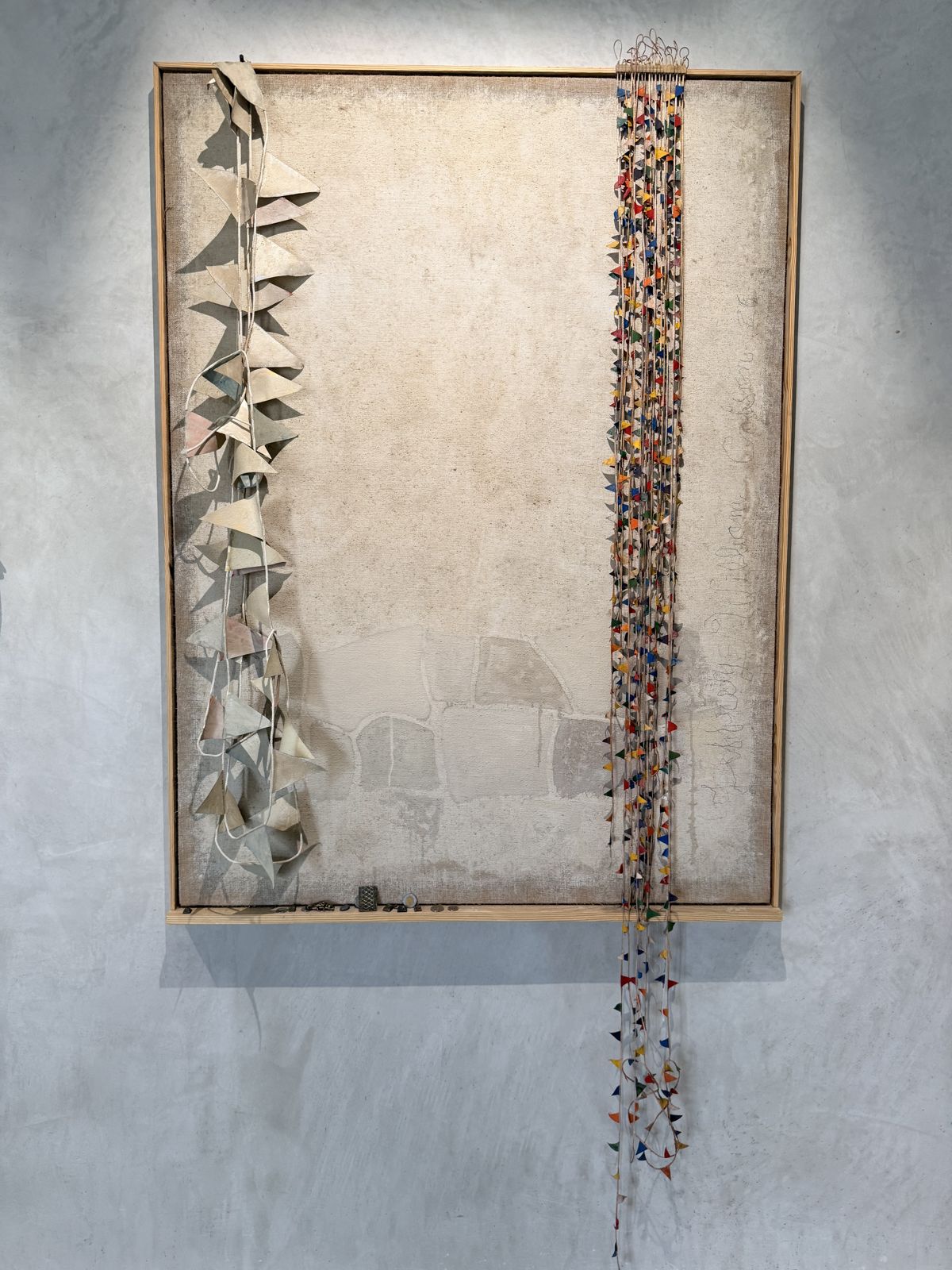
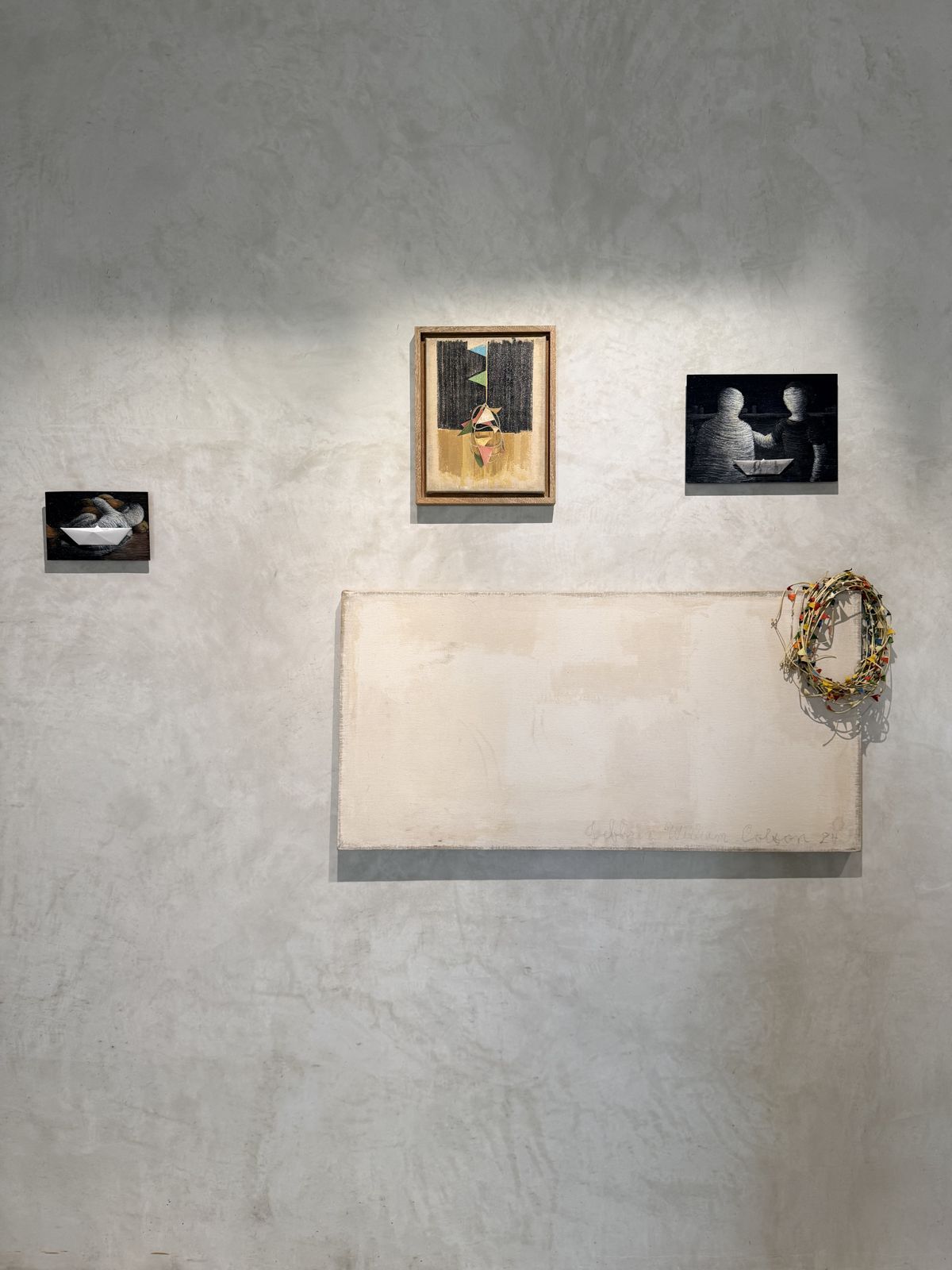
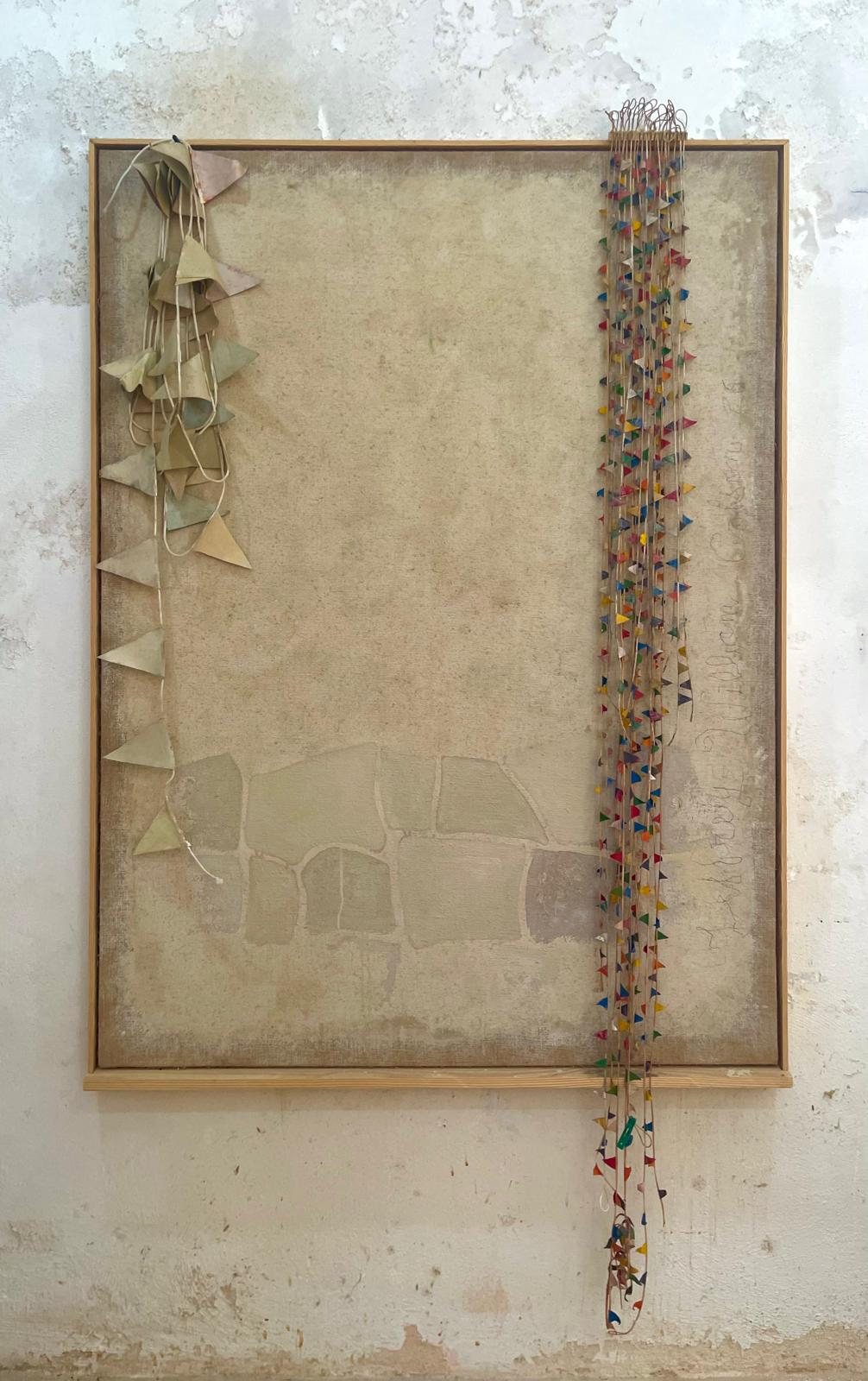
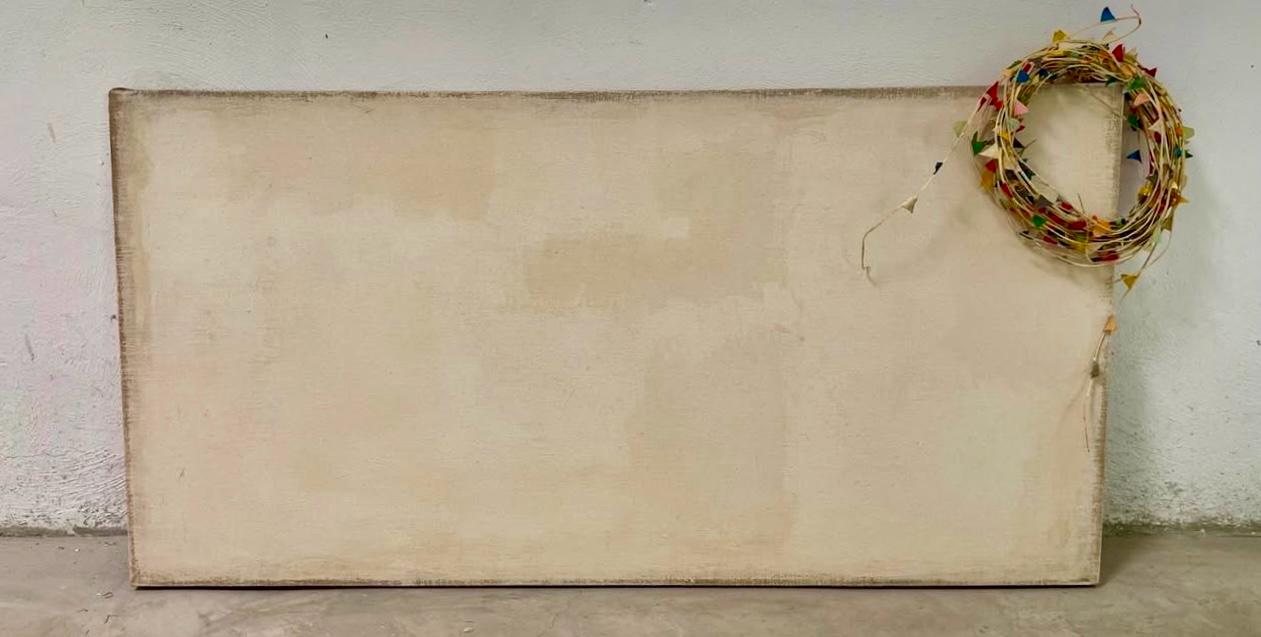
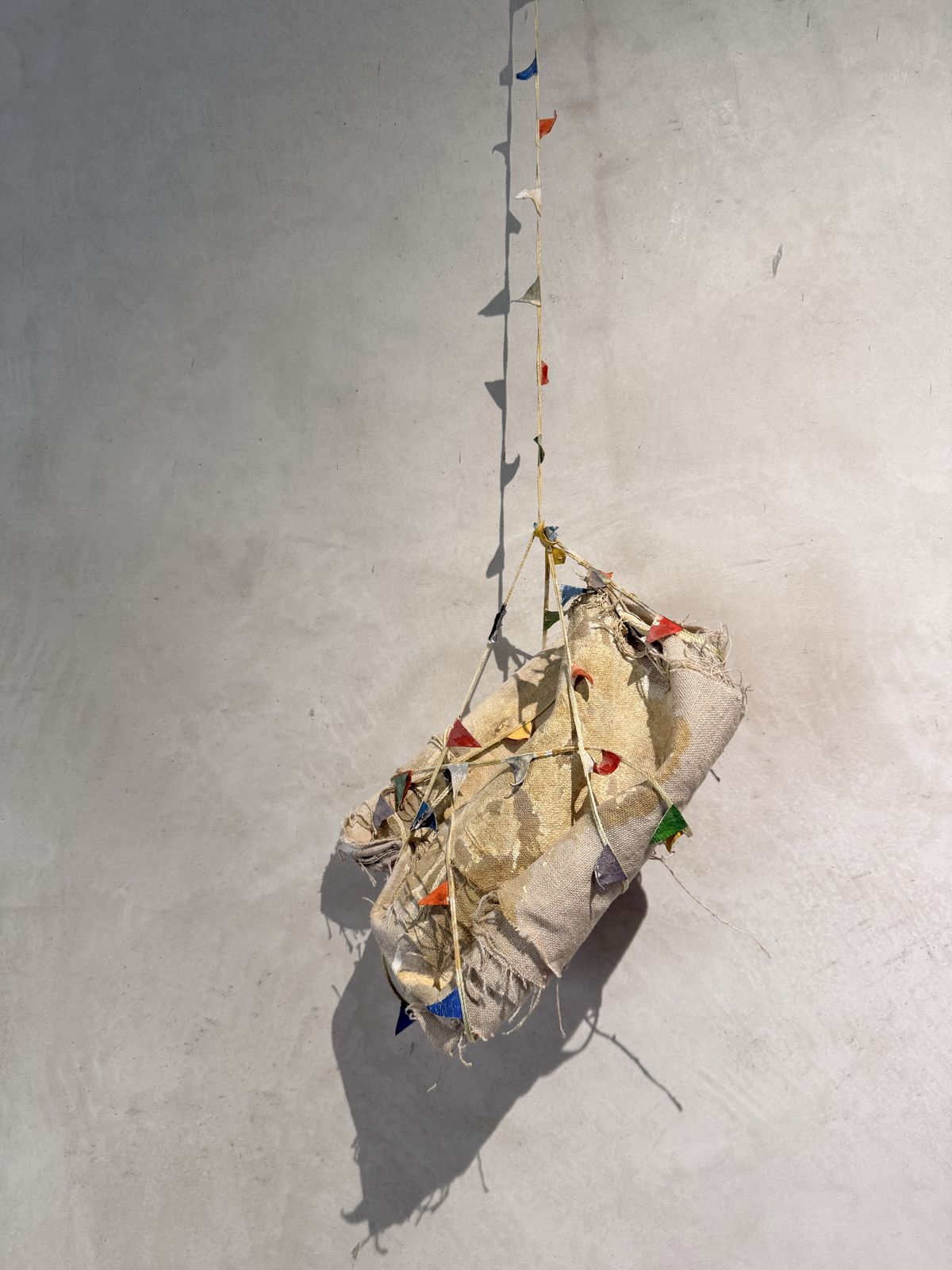
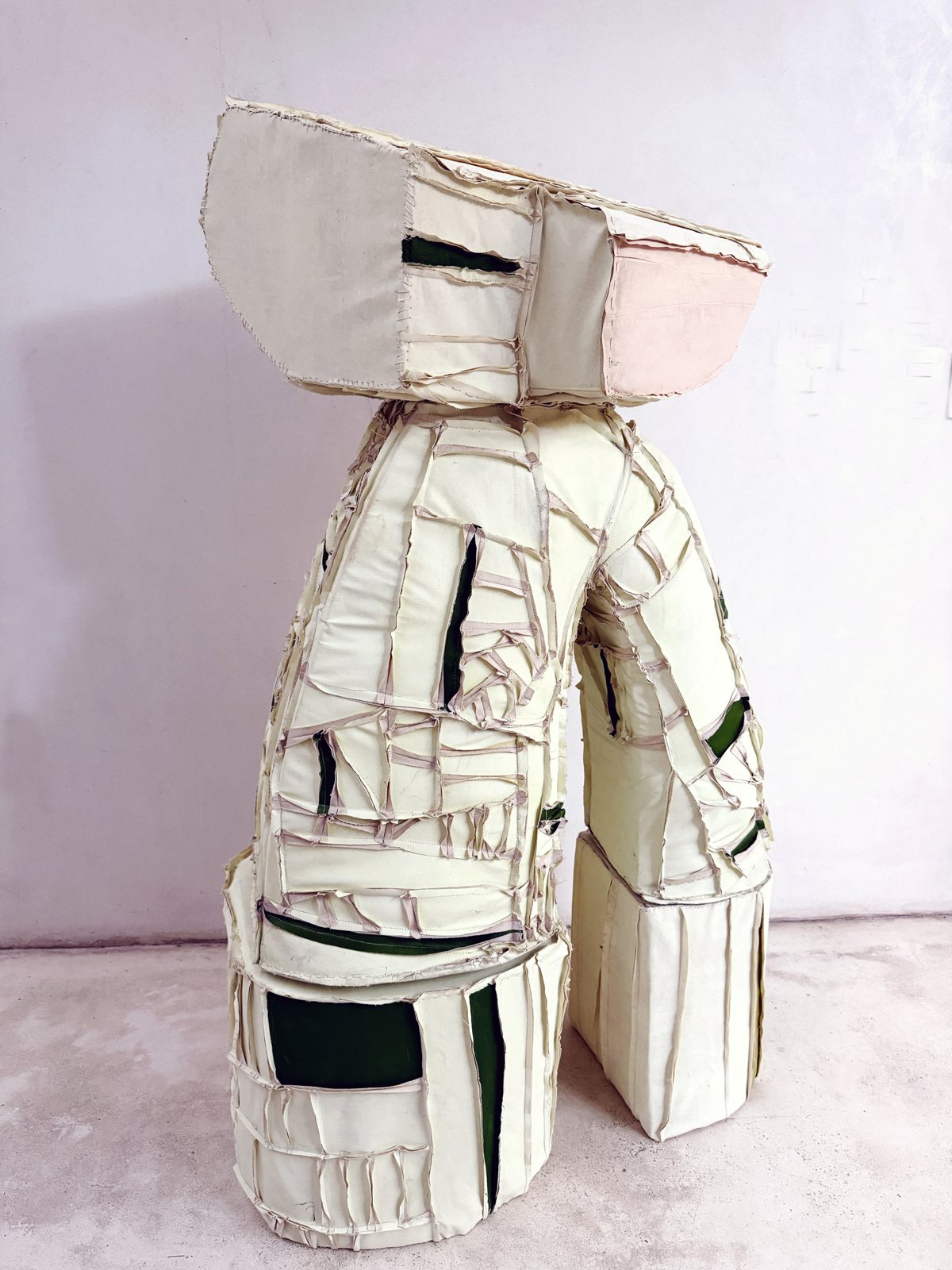
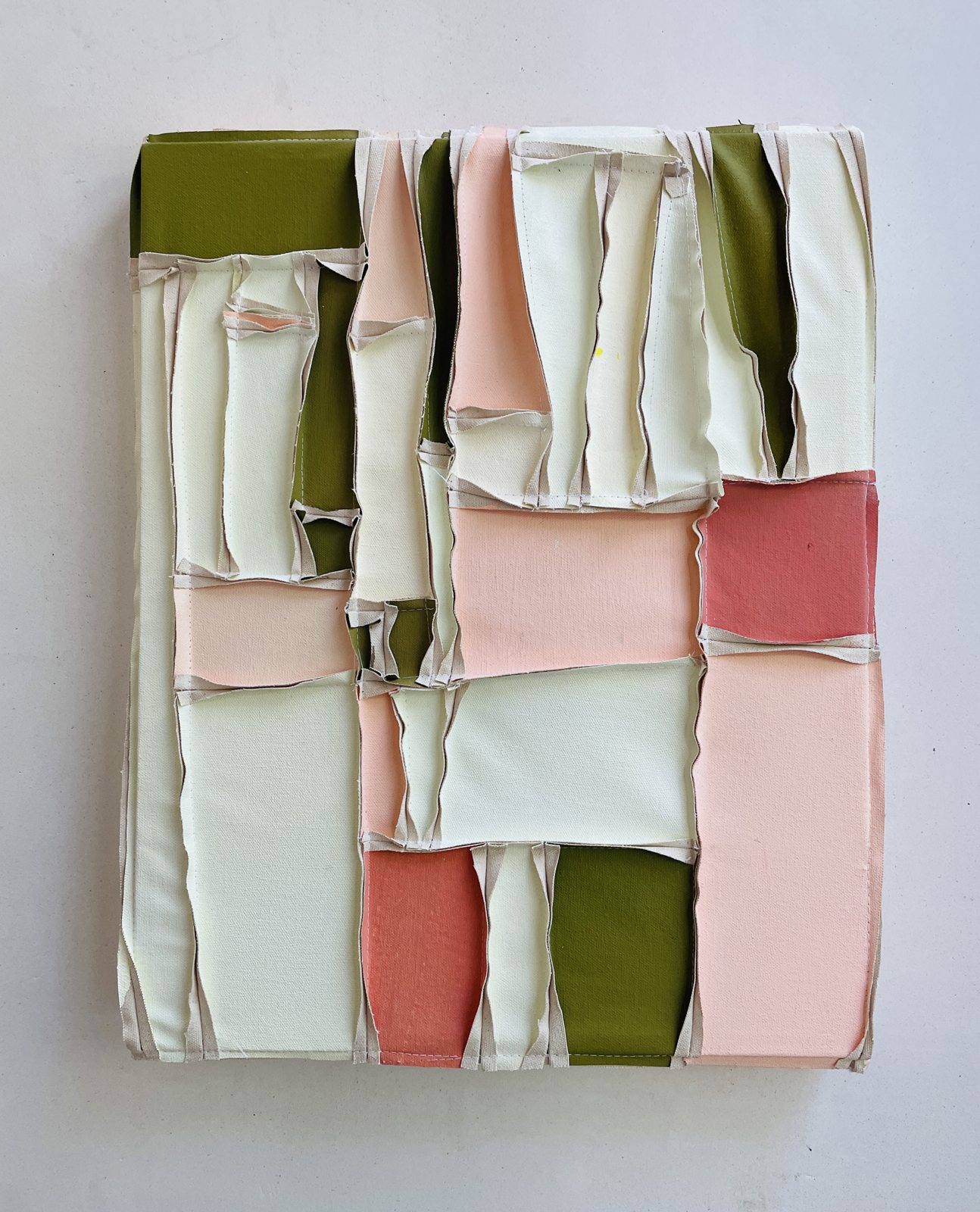
How can a painting go beyond the limits of the canvas? How can a painting be done with materials beyond paint? Jeff’s work is one of the limitless answers to those questions. Both traditional painting materials and three-dimensional objects merge in Jeff’s pieces.
Diverse in format and so intimate, the artist’s process is visible through every layer of his work. Each fragment of the diverse materials that keep building these structures blends into endless possibilities. Some fragments carefully crafted for each piece, combined with conventional and nonconventional painting, transform the space inside and outside the canvas. Pieces of the present and the past invite us to reflect on how an artwork can be constructed.
¿Cómo puede una pintura trascender los límites del lienzo? ¿Cómo puede una pintura crearse con materiales que van más allá de la pintura? La obra de Jeff es una de las respuestas ilimitadas a estas preguntas. Tanto los materiales pictóricos tradicionales como los objetos tridimensionales se fusionan en sus piezas.
De formato diverso y con una gran intimidad, el proceso del artista es visible en cada capa de su obra. Cada fragmento de los diversos materiales que construyen estas estructuras se funde en infinitas posibilidades. Algunos fragmentos, cuidadosamente elaborados para cada pieza, combinados con pintura convencional y no convencional, transforman el espacio dentro y fuera del lienzo. Fragmentos del presente y del pasado nos invitan a reflexionar sobre cómo se puede construir una obra de arte.
In the exhibitEn la exposición
Monica Rezman & Genoveva Kelleher
Monica Rezman
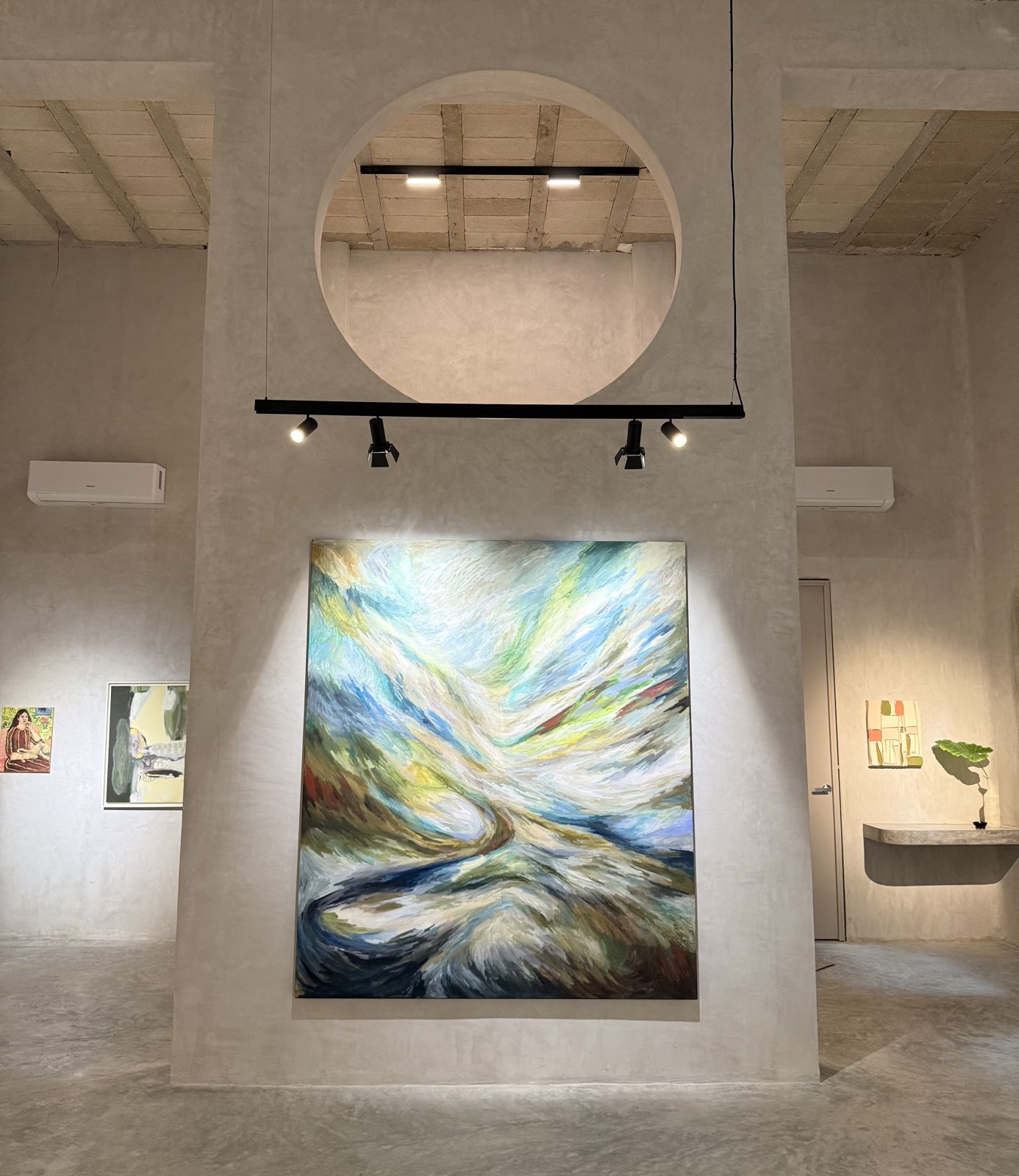
I first encountered Genoveva Kelleher’s work in Oaxaca in an exhibition shared with five other female artists. Her paintings are highly energetic, with brushstrokes moving in parallel directions, generating a sense of current and flow across the surface. Color operates in tandem with gesture, not as expression alone but as an activating force, intensifying the movement of the paint and producing a charged, dynamic field rather than a centralized image.
Conocí la obra de Genoveva Kelleher en Oaxaca, durante una exposición compartida con otras cinco artistas. Sus pinturas son muy enérgicas, con pinceladas que se mueven en direcciones paralelas, generando una sensación de corriente y fluidez en la superficie. El color opera en sintonía con el gesto, no solo como expresión, sino como una fuerza activadora, intensificando el movimiento de la pintura y produciendo un campo cargado y dinámico en lugar de una imagen centralizada.
Genoveva Kelleher
I met the artist Mónica Rezman when I shared an exhibition project I had in mind with her: Organic and Formal, a show in Oaxaca bringing together six women artists whose work is rooted in nature through different languages and techniques. Mónica’s work immediately stood out.
Her practice is exceptional: through textures and the interweaving of diverse materials, her work creates a strong connection to nature, exploring its multiple forms and transformations. Her paintings expand into the third dimension, generating organic structures that resonate deeply with my own artistic research. Although our approaches differ, we share a common sensitivity toward materiality and the natural world.
Creating community and offering mutual support among artists is deeply important to me. This invitation continues that spirit, celebrating dialogue, connection, and collective growth.
Conocí a la artista Mónica Rezman cuando compartí con ella un proyecto expositivo que tenía en mente: Orgánico y Formal, una muestra en Oaxaca que reúne a seis artistas cuyo trabajo se inspira en la naturaleza a través de diferentes lenguajes y técnicas. El trabajo de Mónica destacó de inmediato.
Su práctica es excepcional: a través de texturas y la combinación de diversos materiales, su obra crea una fuerte conexión con la naturaleza, explorando sus múltiples formas y transformaciones. Sus pinturas se expanden hacia la tercera dimensión, generando estructuras orgánicas que resuenan profundamente con mi propia investigación artística. Aunque nuestros enfoques difieren, compartimos una sensibilidad común hacia la materialidad y el mundo natural.
Crear comunidad y ofrecer apoyo mutuo entre artistas es fundamental para mí. Esta invitación continúa con ese espíritu, celebrando el diálogo, la conexión y el crecimiento colectivo.
In the exhibitEn la exposición
Claribel Calderius, Olivia Castillo & Antonio Castillo
Claribel Calderius
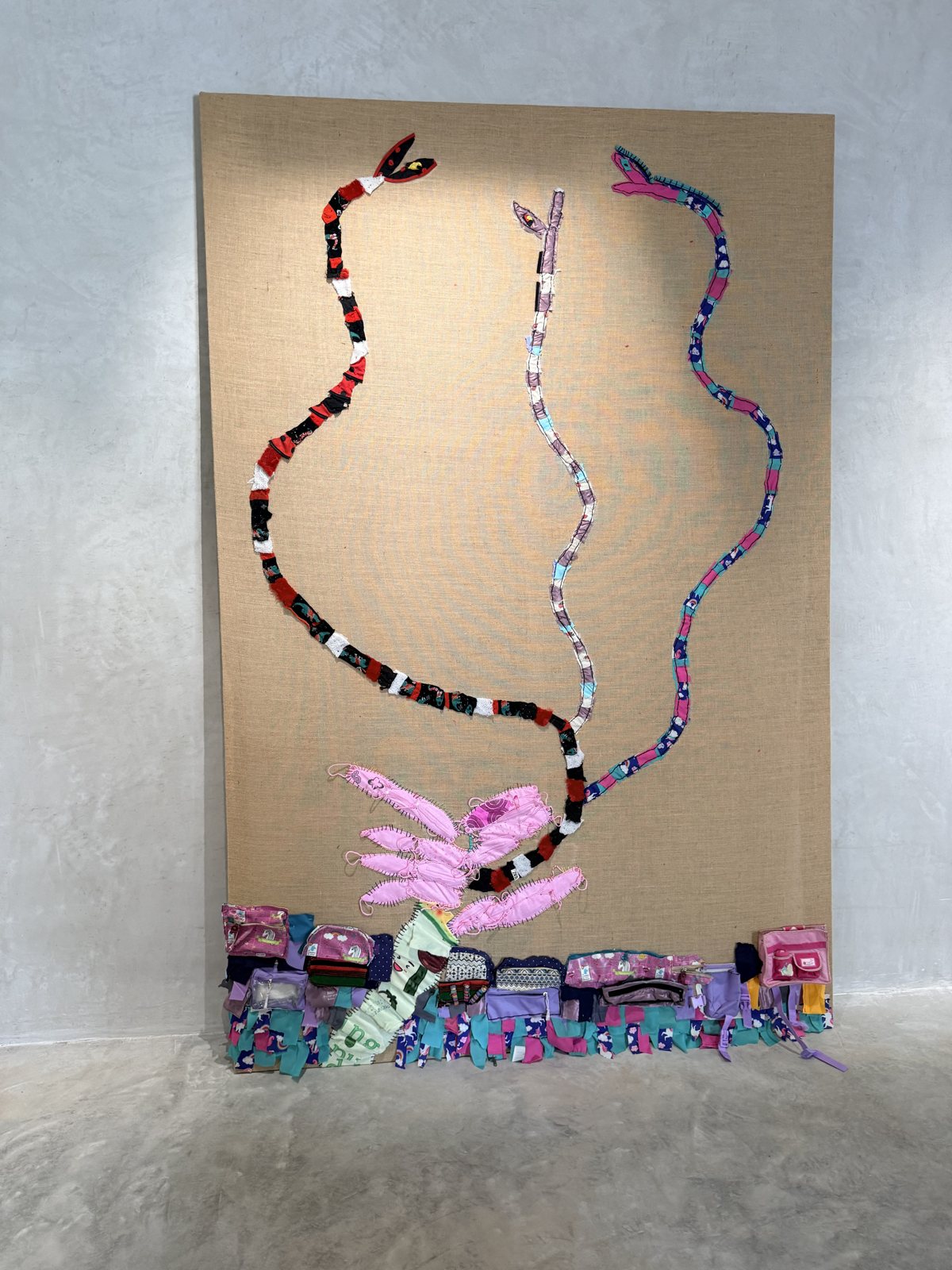
We keep what no longer belongs to us
as if trying to tie time with our fingers.
It is not the object we preserve,
but the illusion that something might stay
when everything insists on leaving.
Attachment is not born from memory,
but from the fear that memory might stop hurting.
That in letting go, the past could lose its body
and become silence.
We bind backpacks, toys, remnants of use
as if by holding their shape
we could prevent the moment from escaping.
As if matter could obey nostalgia.
Time cannot be stored.
It only repeats itself in memory
or is released through gesture.
Attachment is that impossible attempt
to turn memory into presence,
to make yesterday an object
and the object a promise of permanence.
Letting go is not losing.
It is accepting that memory does not need support
in order to continue existing.
Elegí colaborar con Olivia porque me fascina su facilidad manual y su explosión creativa. Tiene una capacidad sorprendente para construir desde pequeñas esculturas, personajes surrealistas, mundos fascinantes hasta objetos hiperrealistas, y me resultan profundamente asombrosas para alguien de su edad. Su relación con los materiales es directa, natural, casi instintiva, como alguien que ha vivido muchas épocas y ha caminado por el tiempo absorbiendo experiencias ajenas.
La colaboración con Antonio me interesaba por su manera profundamente conceptual de entender el arte. Su trabajo parte de la capacidad de colocarse en la piel de otros, de habitar realidades que no le son propias. Le interesa asumir posturas ajenas, encarnar personajes y contextos distintos, como el de alguien que vive bajo una dictadura en Cuba, y crear desde esa experiencia emocional y mental.
Lo que me resulta fascinante es su facilidad para desplazarse simbólicamente de su propio lugar y reencarnarse en otro. No observa desde afuera: siente, padece y piensa desde esa postura asumida. Su proceso creativo nace de esa empatía radical, de esa necesidad de comprender al otro desde dentro, no como representación sino como vivencia.
Mi interés en colaborar con él surge de ese cruce: acompañar su manera de construir desde lo conceptual y lo narrativo, y ponerla en diálogo con mi propio lenguaje, más físico y procesual. Me atrae observar cómo esa capacidad de habitar otras pieles puede transformarse en materia, gesto y tiempo compartido.
Olivia Castillo
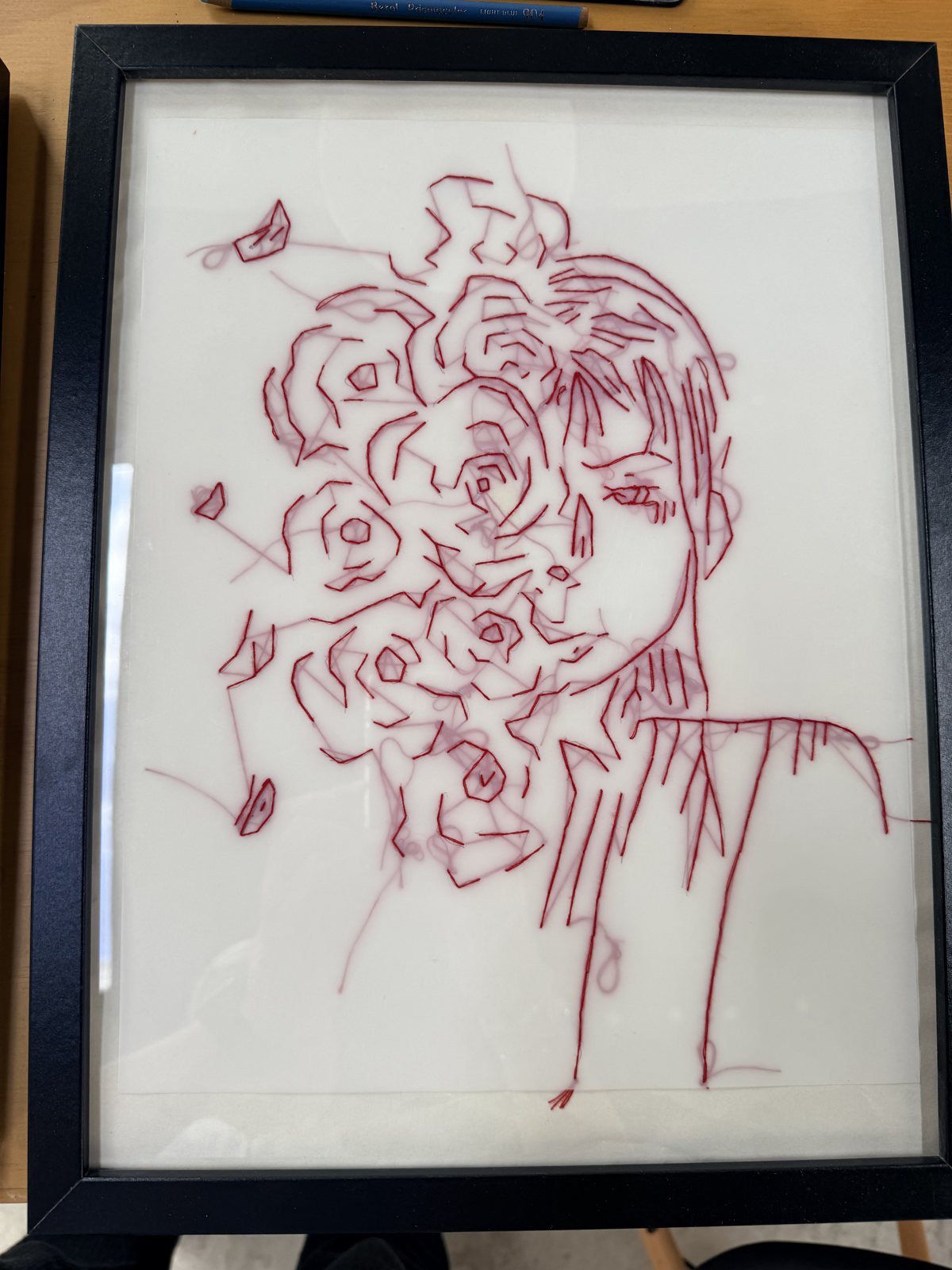
The idea of collaborating with Claribel fascinated me from the start. I usually work quickly and intuitively: I draw, I build, I create almost without thinking too much, letting ideas emerge naturally. I like that immediacy, that direct gesture that doesn’t dwell too much on reflection.
Working with Claribel allowed me to discover another dimension of my own process. What I normally do in minutes or an hour transformed into a longer, almost meditative, time. Embroidering my drawings was learning to stop, to lengthen time, to repeat a gesture with patience.
Each stitch forced me to look at my own drawing in a different way, to be present, to breathe with the process. It was a very different experience from what I’m used to and, at the same time, very revealing: understanding that the same idea can inhabit completely different rhythms.
La idea de colaborar con Claribel me fascinó desde el principio. Yo suelo trabajar de forma rápida e intuitiva: dibujo, construyo, creo casi sin pensarlo demasiado, dejando que las ideas aparezcan de manera natural. Me gusta esa inmediatez, ese gesto directo que no se detiene demasiado a reflexionar.
Trabajar con Claribel me permitió descubrir otra dimensión de mi propio proceso. Lo que normalmente hago en minutos o en una hora se transformó en un tiempo más largo, casi meditativo. Bordar mis dibujos fue aprender a detenerme, a alargar el tiempo, a repetir un gesto con paciencia.
Cada puntada me obligaba a mirar mi propio dibujo de otra manera, a estar presente, a respirar con el proceso. Fue una experiencia muy distinta a la que estoy acostumbrada y, al mismo tiempo, muy reveladora: entender que una misma idea puede habitar ritmos completamente distintos.
Antonio Castillo
My relationship with nostalgia is born from distance. Due to the political situation in my country, I have had to part ways not only with my place of birth but with a part of who I am. Cuba exists for me in fragments such as memories, stories, images and emotions that come alive through my work. Creating art has become a way of holding onto a place I cannot physically return to and questioning what it means to belong to somewhere you experience mostly through memory.
My process is intuitive and emotional. I often allow images, colors and gestures to guide me rather than following a rigid plan. There is a constant tension between what I remember and what I imagine, between clarity and loss. I am interested in how memory distorts reality, in how romanticizing a different past can hold you back but at the same time give you purpose.
Through my work, I am not trying to recreate Cuba as it was, but rather how it feels to carry it with you while growing up elsewhere. My art reflects an identity in transition, shaped by absence, resilience and a deep desire to stay connected to my roots despite distance and circumstance.
Mi relación con la nostalgia nace de la distancia. Debido a la situación política de mi país, he tenido que separarme no solo de mi lugar de nacimiento, sino de una parte de mí. Cuba existe para mí en fragmentos como recuerdos, historias, imágenes y emociones que cobran vida a través de mi obra. Crear arte se ha convertido en una forma de aferrarme a un lugar al que no puedo regresar físicamente y de cuestionar qué significa pertenecer a un lugar que se experimenta principalmente a través de la memoria.
Mi proceso es intuitivo y emocional. A menudo me dejo guiar por imágenes, colores y gestos en lugar de seguir un plan rígido. Hay una tensión constante entre lo que recuerdo y lo que imagino, entre la claridad y la pérdida. Me interesa cómo la memoria distorsiona la realidad, cómo romantizar un pasado diferente puede frenarte pero, al mismo tiempo, darte un propósito.
A través de mi obra, no intento recrear la Cuba que era, sino cómo se siente llevarla contigo mientras creces en otro lugar. Mi arte refleja una identidad en transición, moldeada por la ausencia, la resiliencia y un profundo deseo de permanecer conectado con mis raíces a pesar de la distancia y las circunstancias.
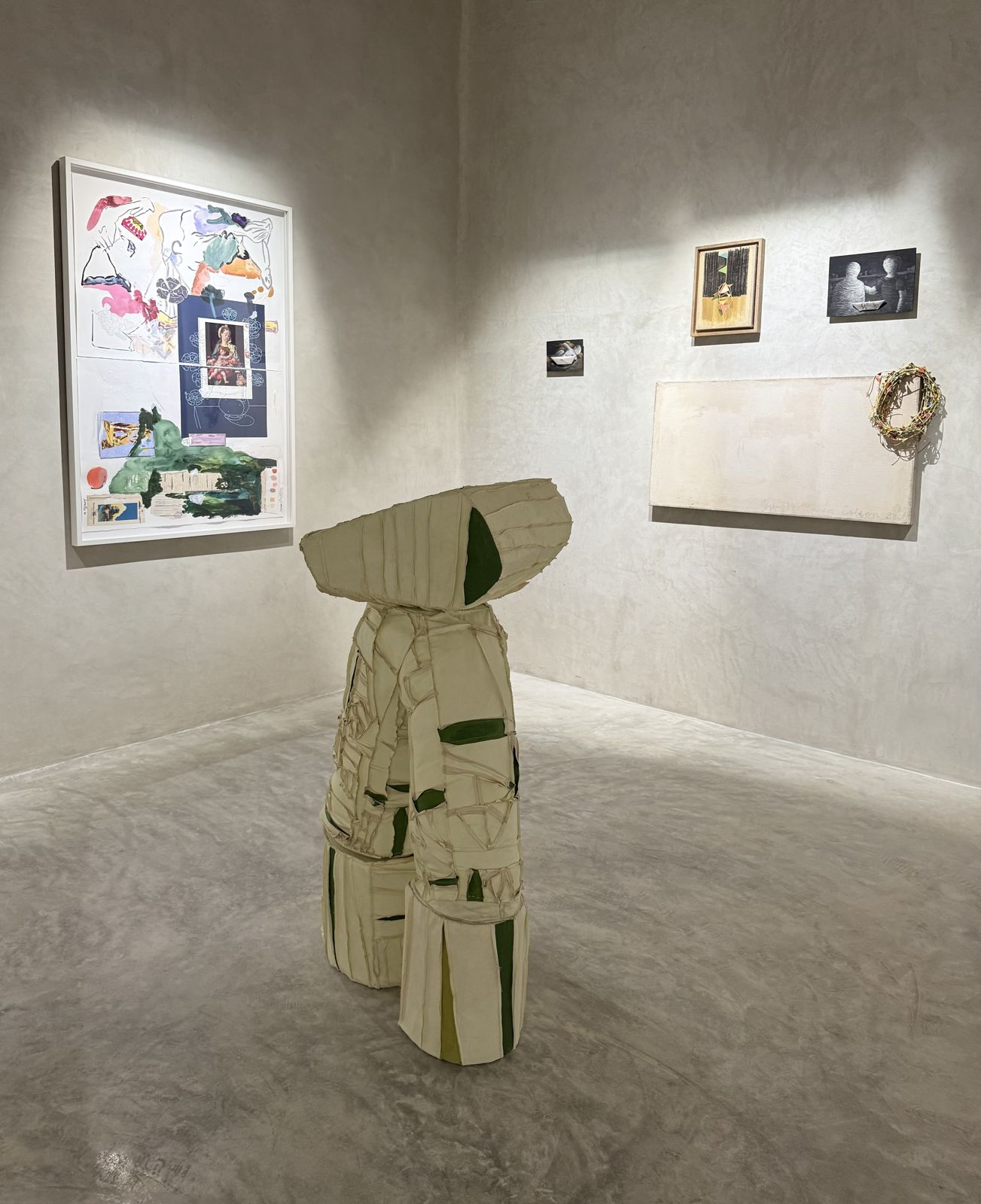
In the exhibitEn la exposición
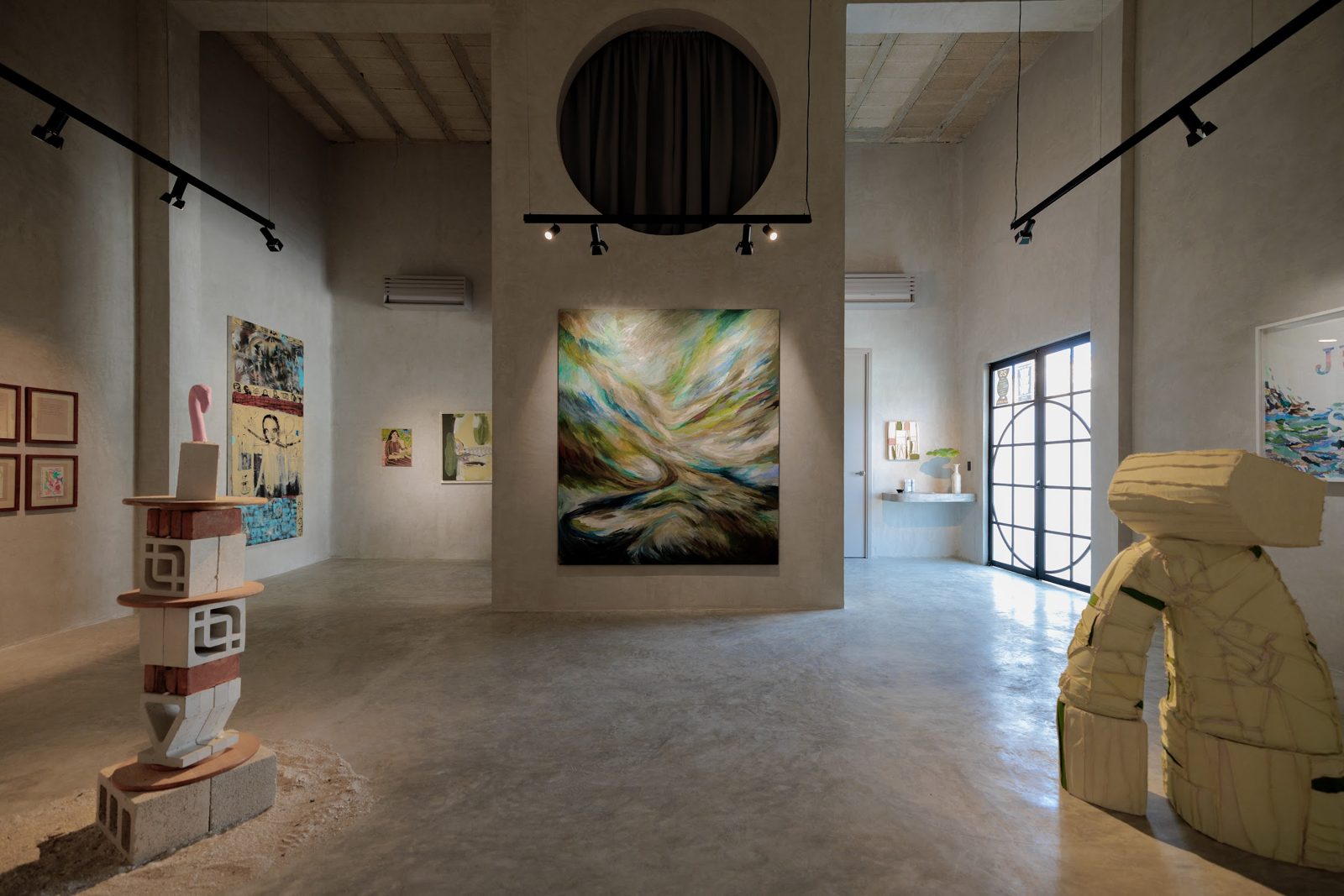
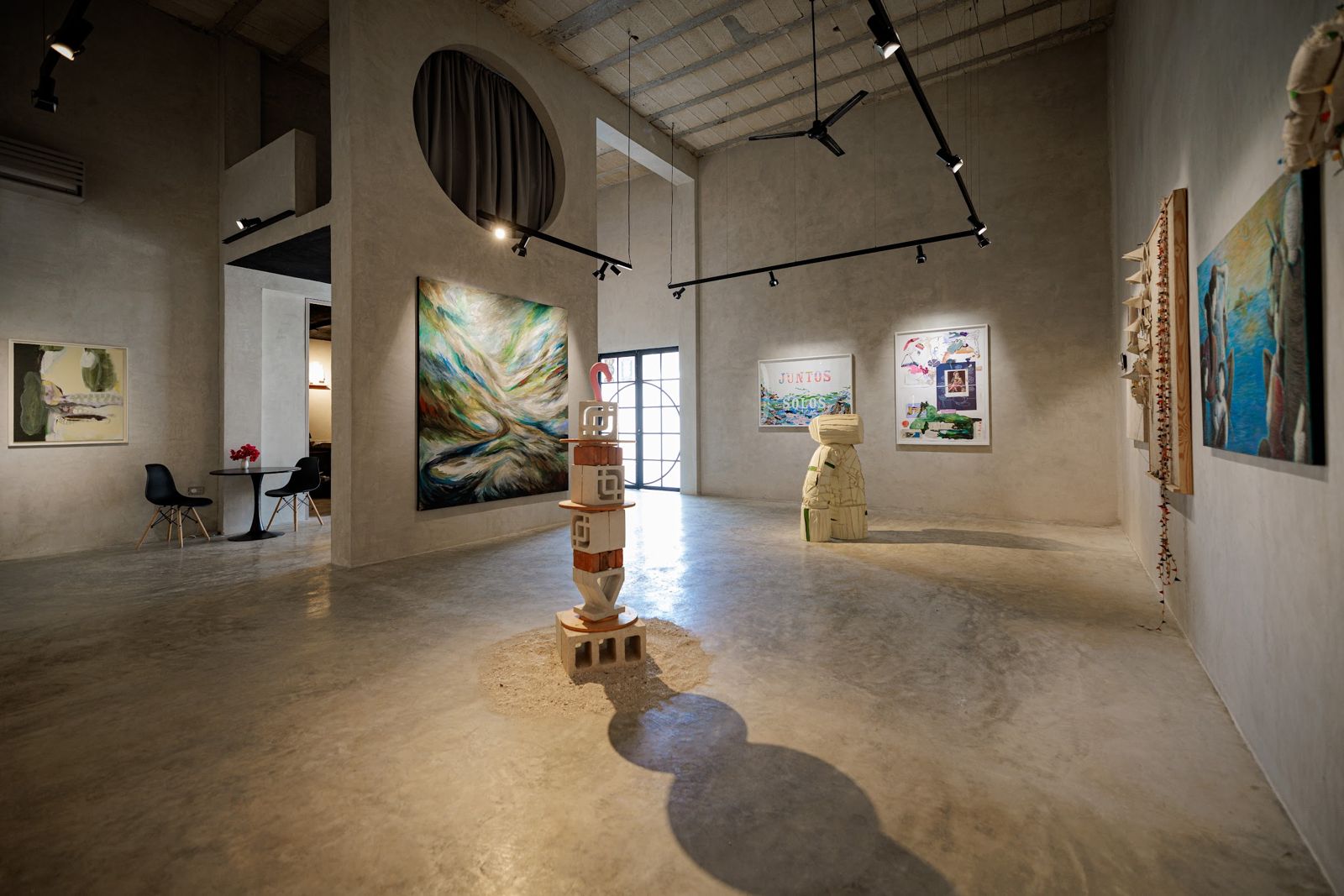
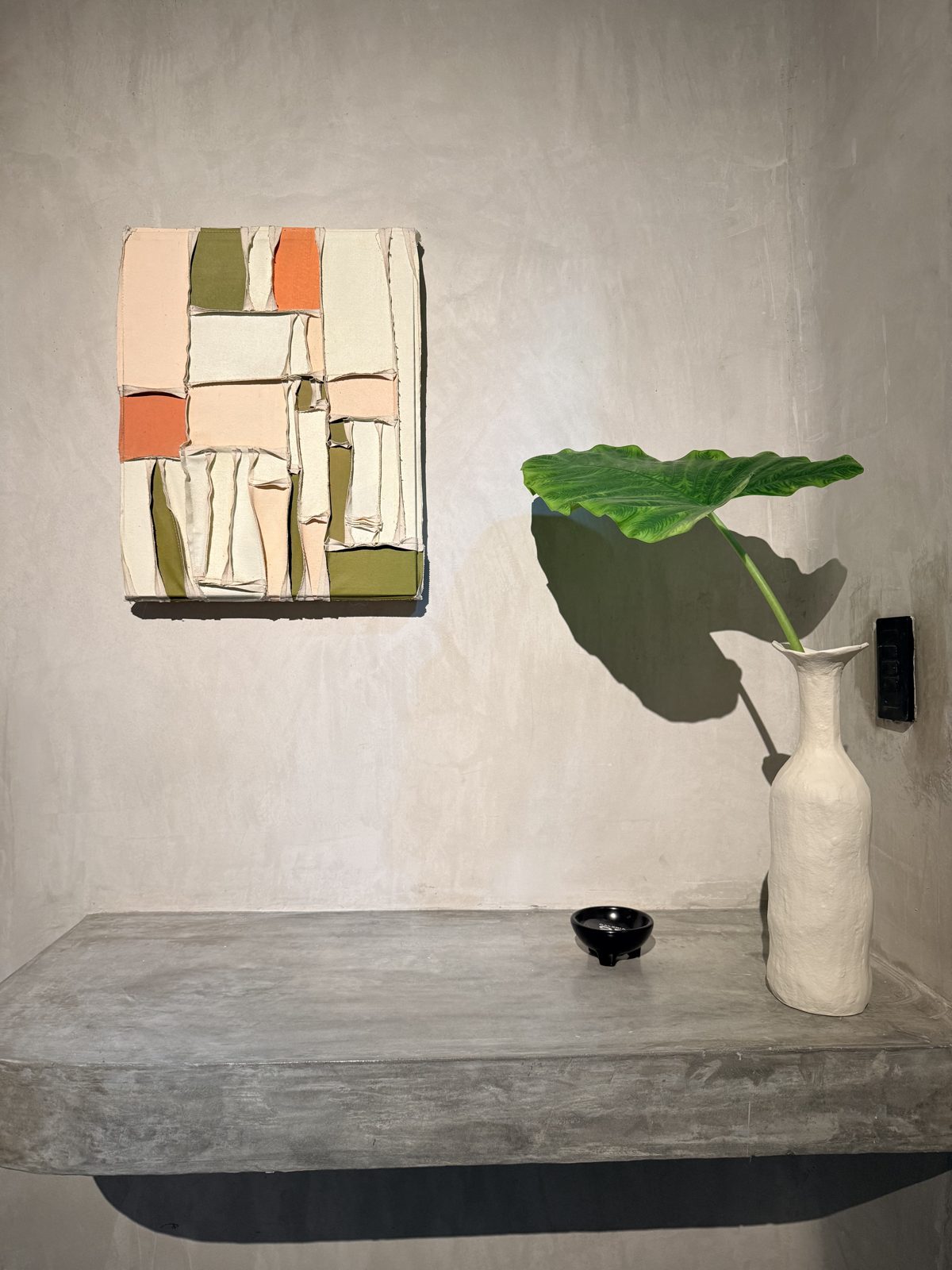
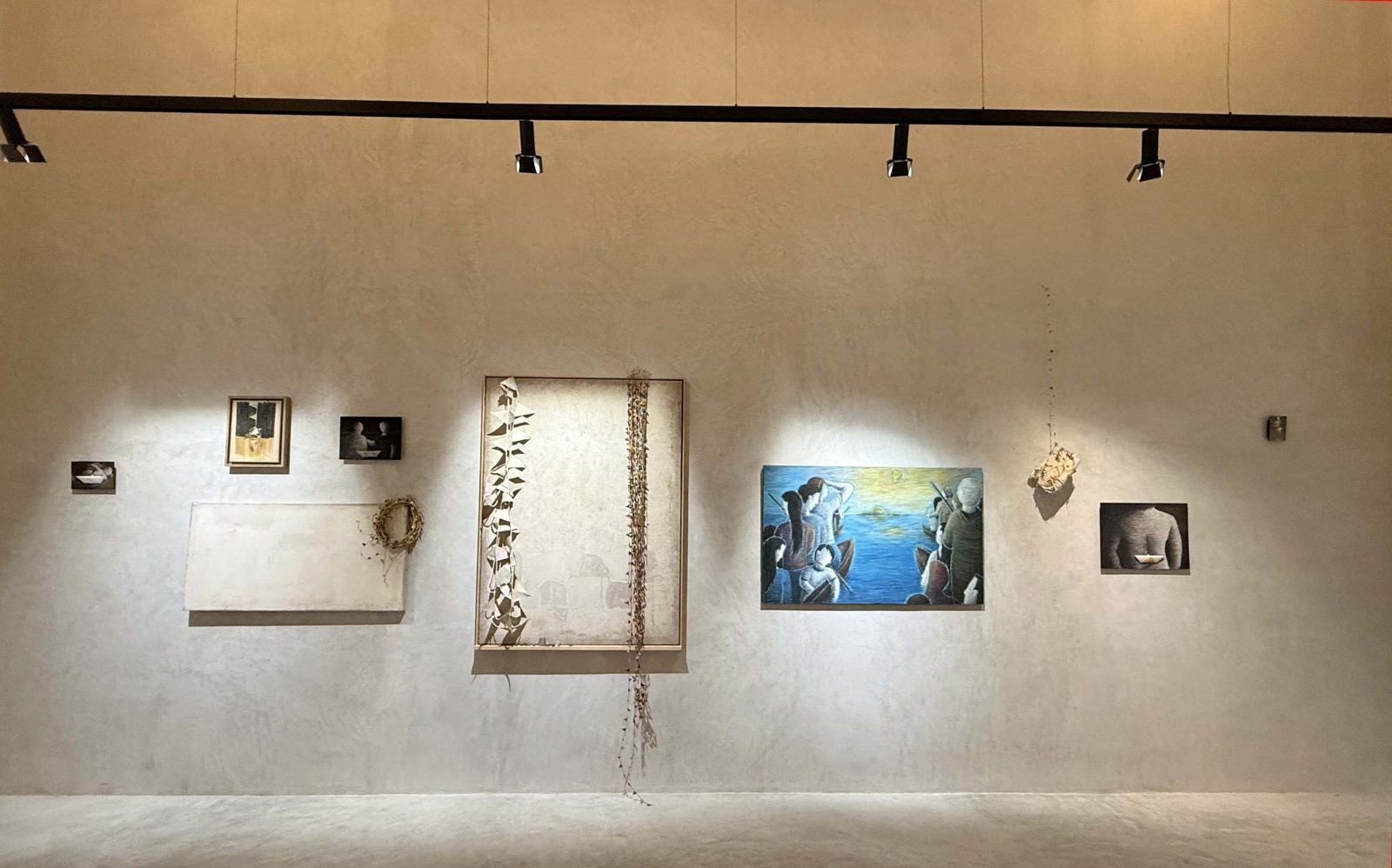
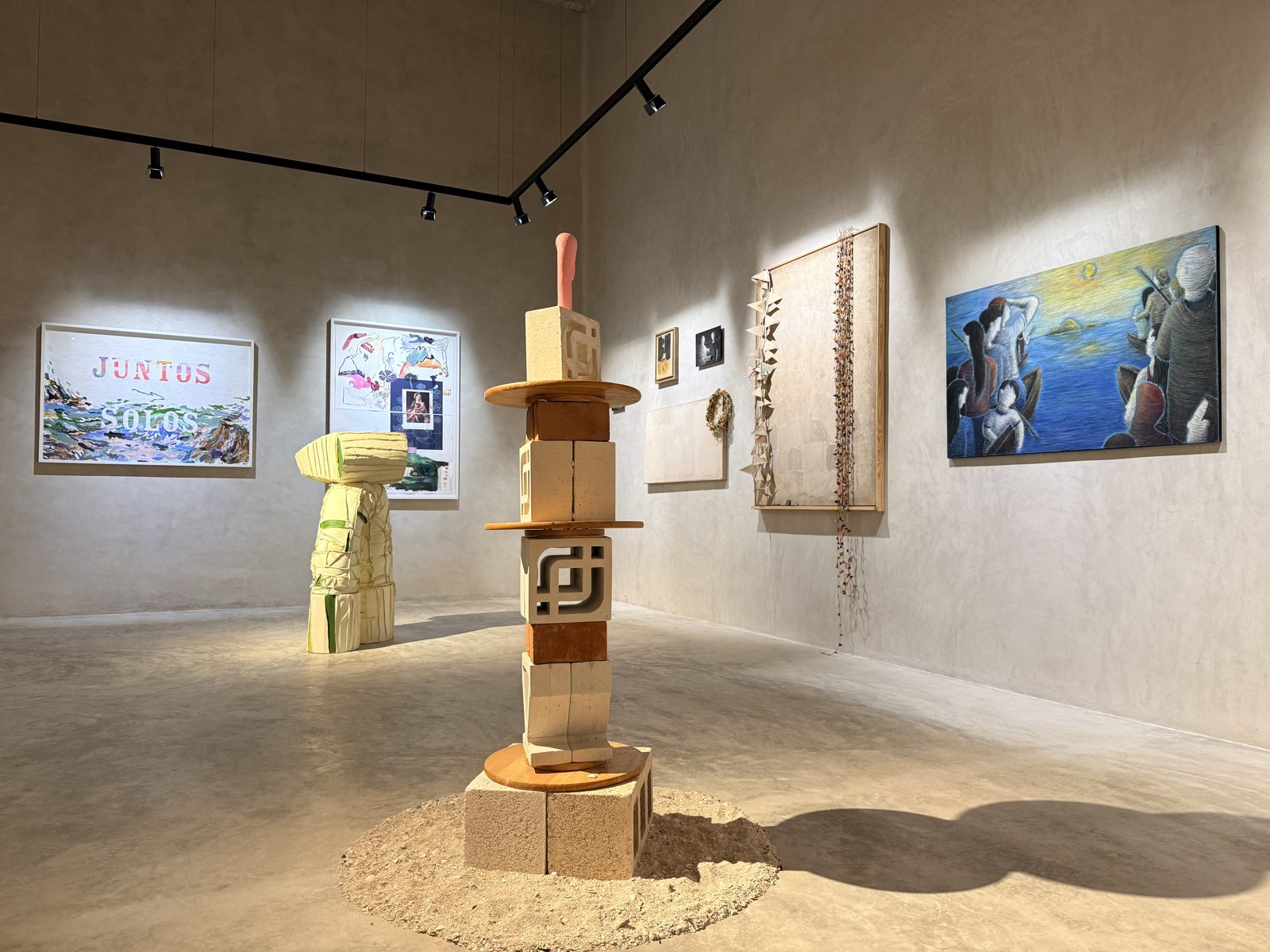
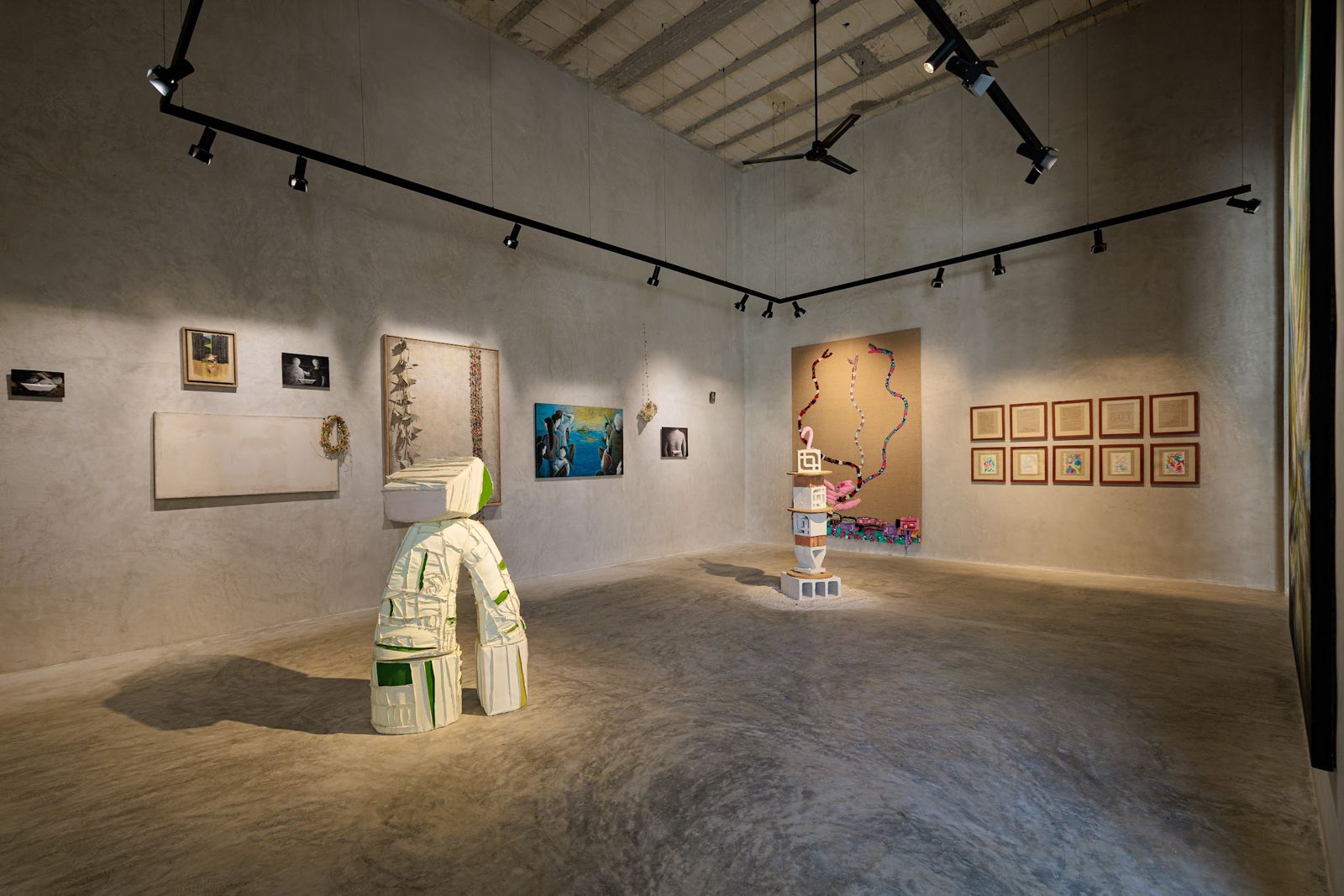
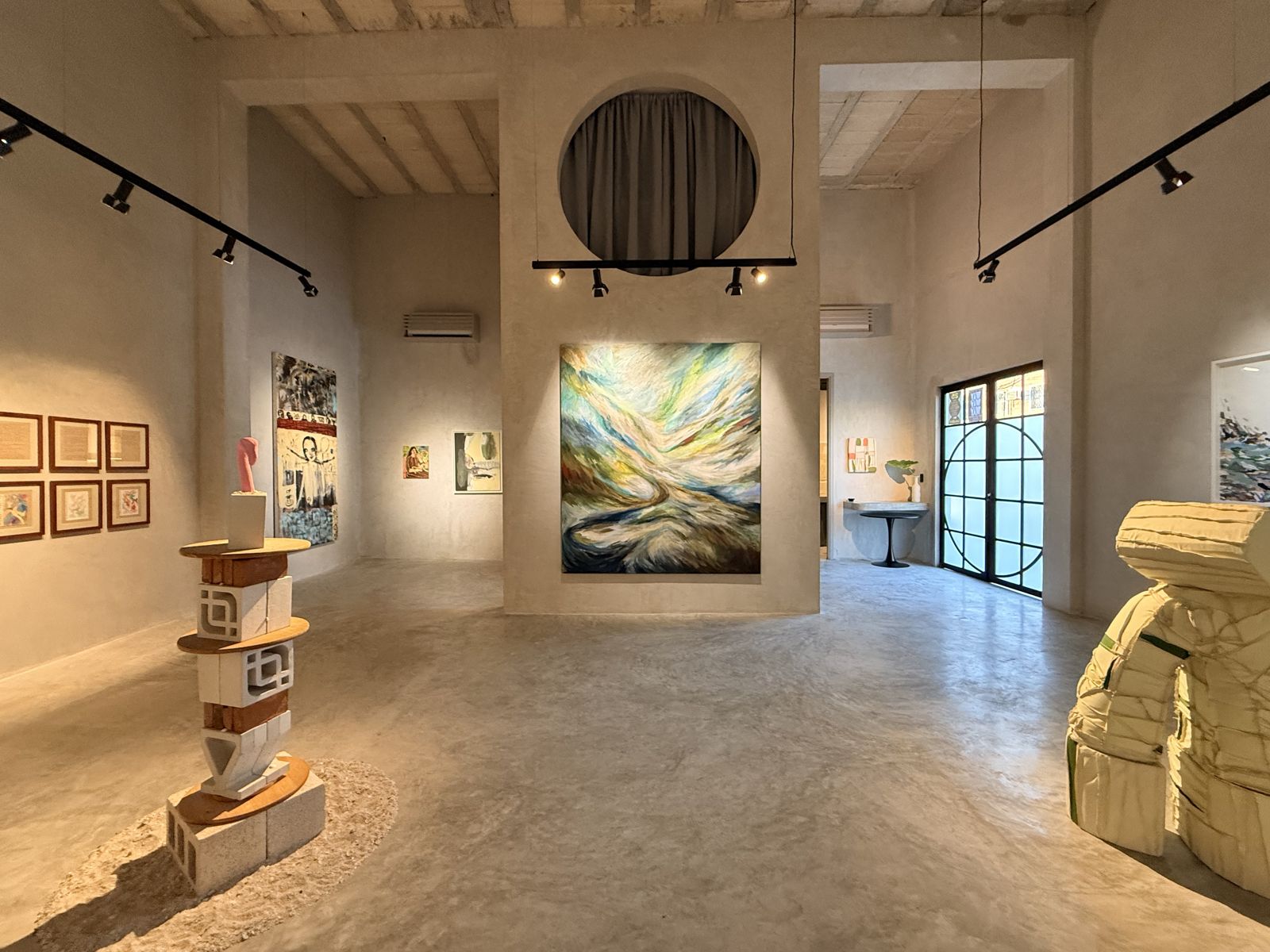
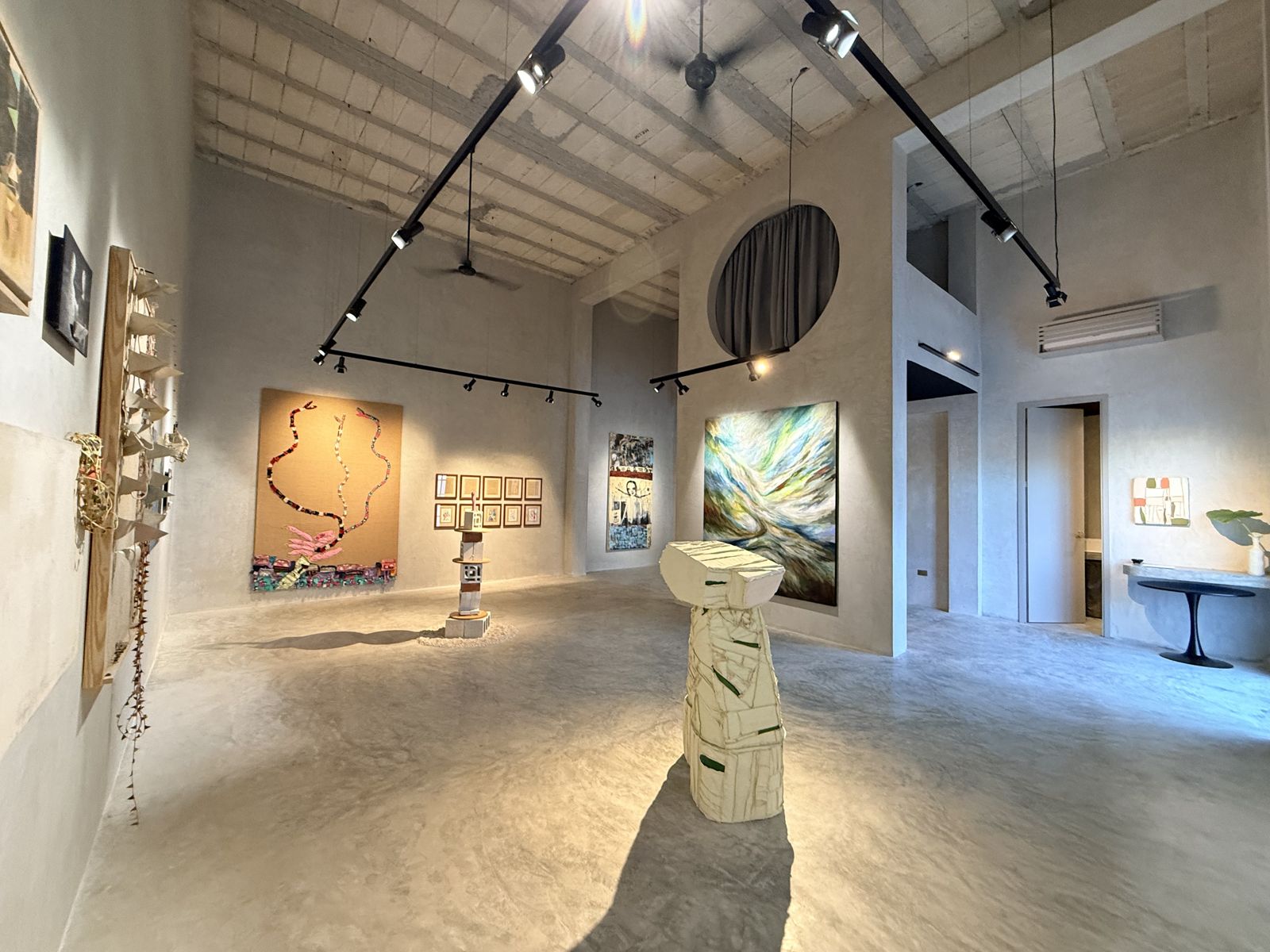
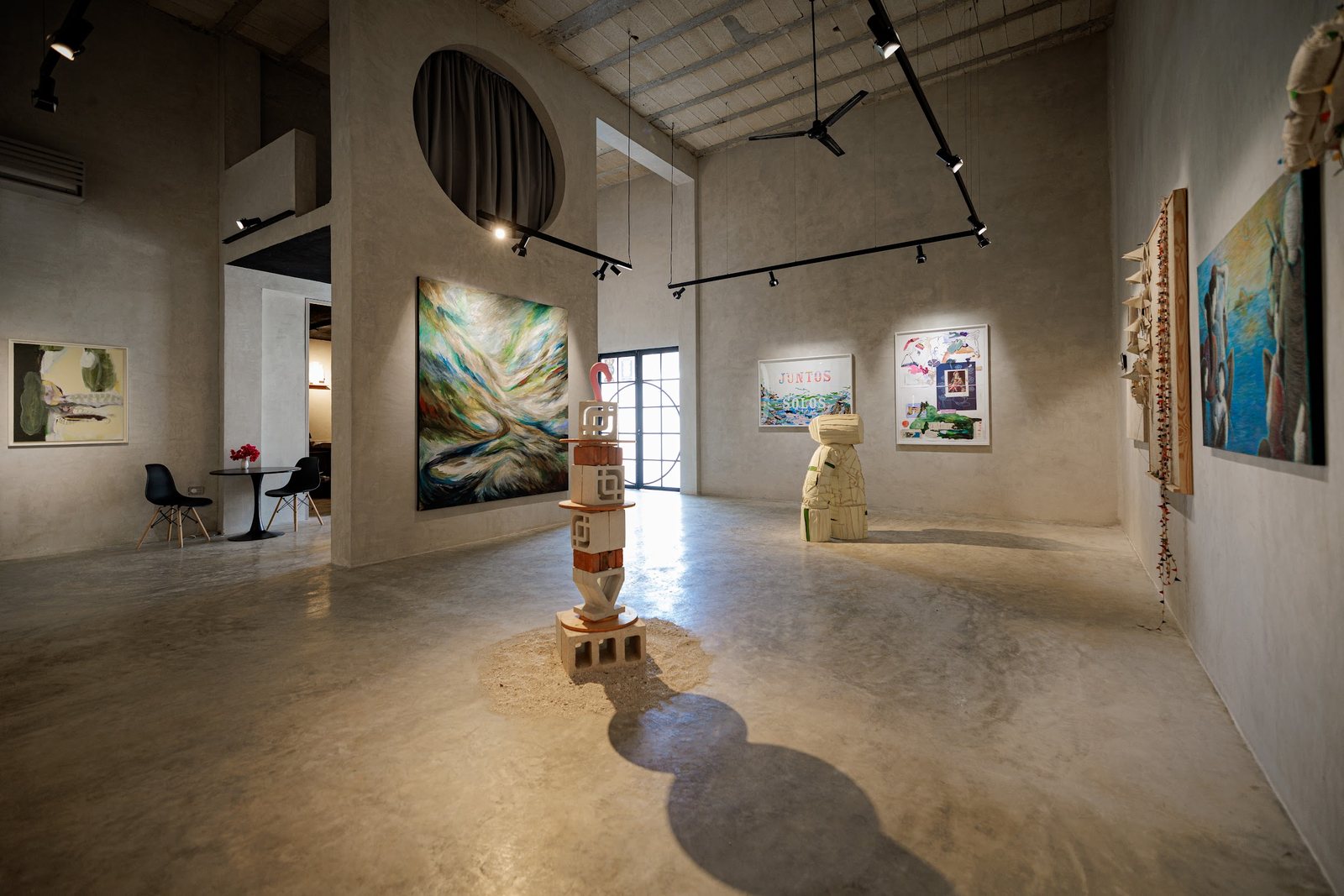
Installation viewsVistas de sala