
Past exhibitExposición pasada
Julio Bekhor
Everything Is Connected
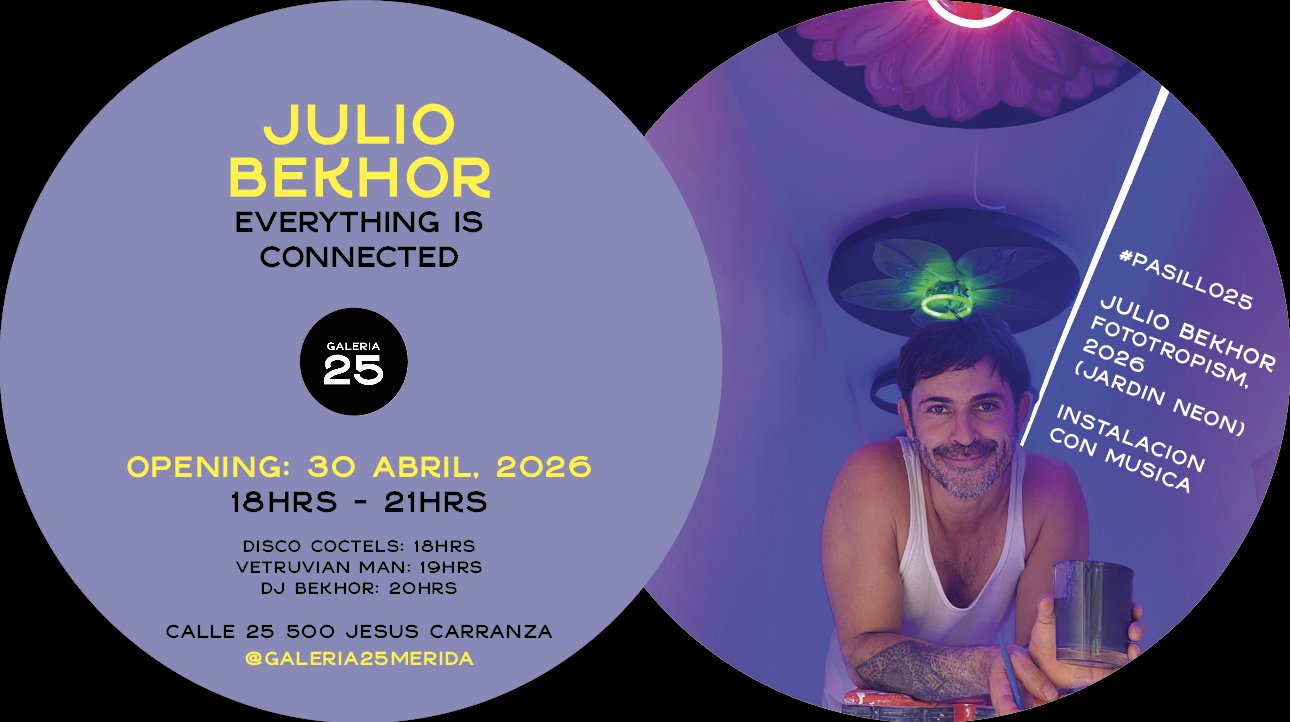
- DatesFechas
- 23 April – 30 May 202623 de abril – 30 de mayo 2026
- OpeningInauguración
- 23 April 2026, 6–9 pm23 de abril 2026, 18–21 h
Exhibition textTexto de la exposición
“Learn to see. Understand that everything is connected to everything else.” —Leonardo da Vinci
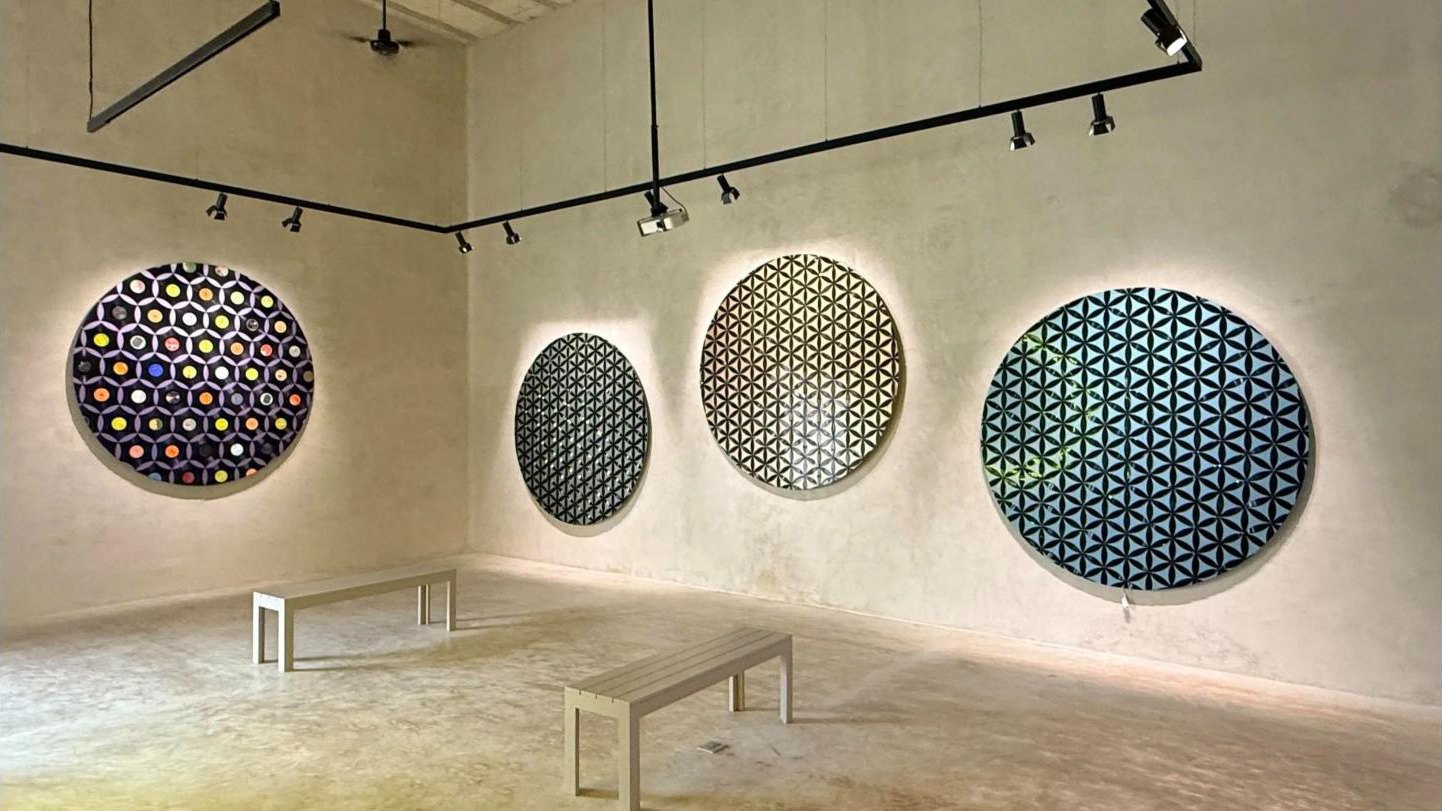
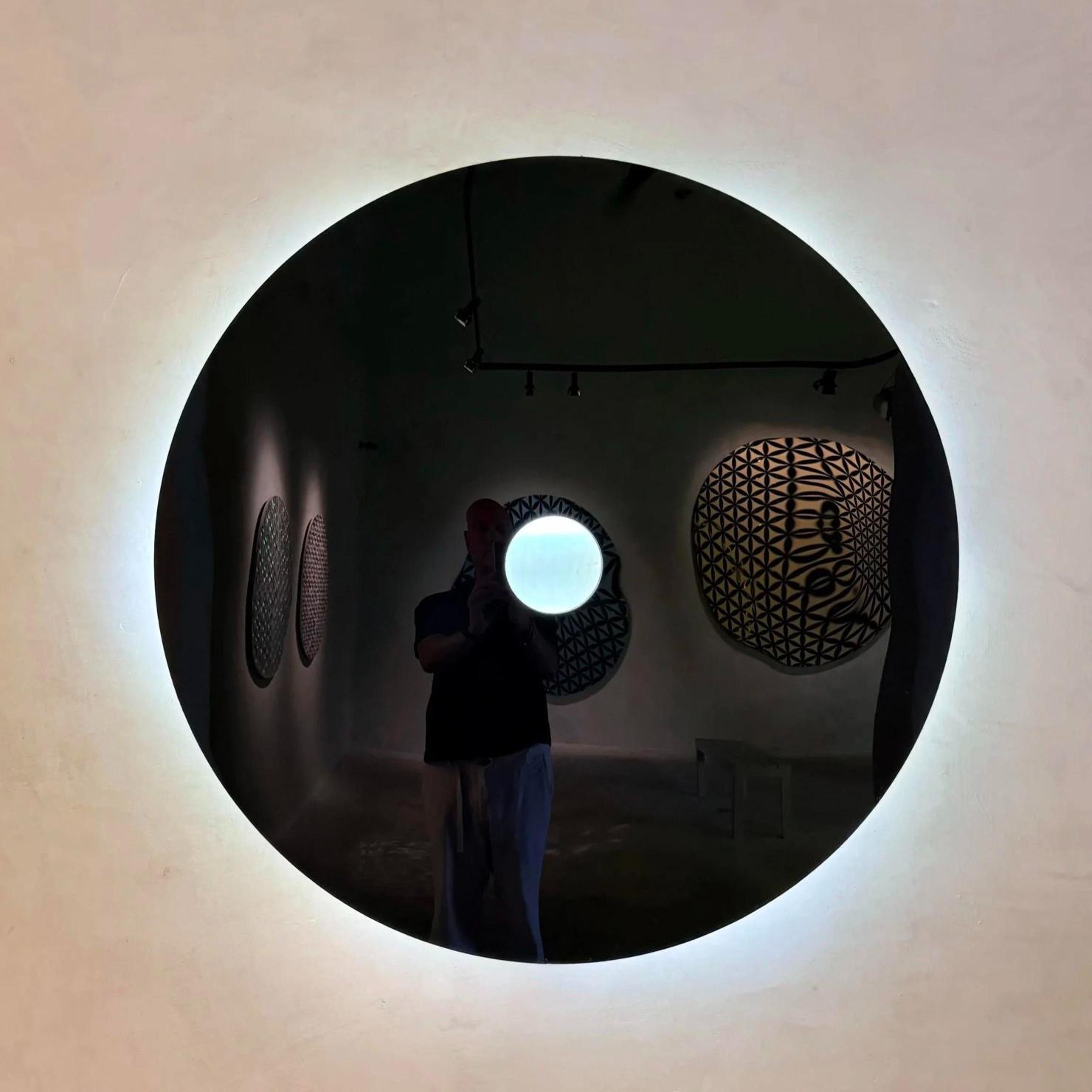
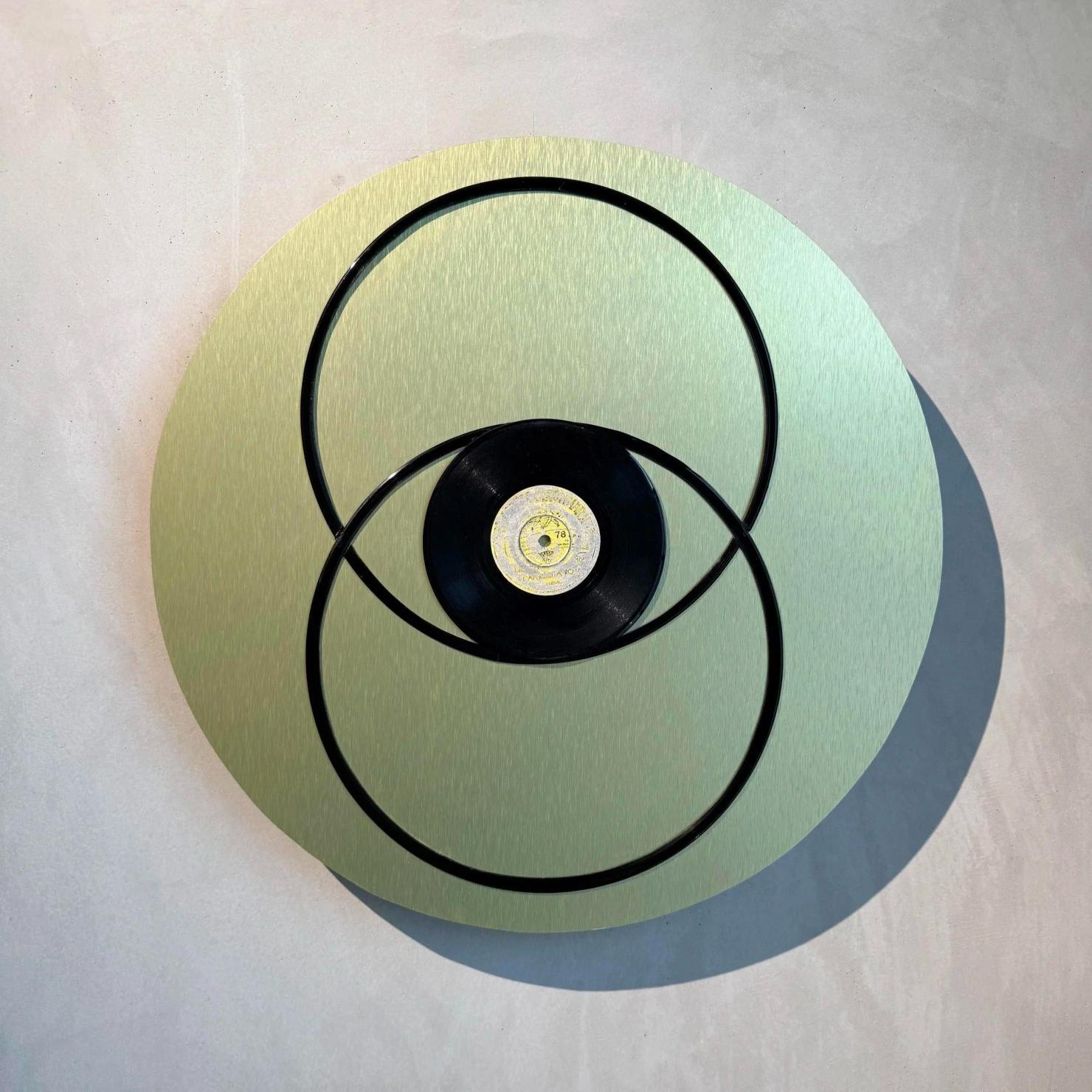
Artist Julio Bekhor adopted the above phrase from Da Vinci from the very beginning of his formal exploration, without limits or barriers, nourished by nature and mysticism. An initiatory journey that has led Bekhor to seek in his works the invisible bond that unites Earth and the Divine. Thus, throughout his more than 25 years of artistic exploration, the geometric element ultimately stood out. For our artist, geometry is indeed the concept of representing the Whole, from the microcosm to the macrocosm. Bekhor sees in geometry, and particularly in the record, the plastic form of his alchemy, this ancestor of science that united magic and the study of nature. The secrecy of the world and of our existence becomes, under the gaze of Julio Bekhor, form and matter united in a vinyl circle, the first medium for storing analog sound, a tool heralding a change of era. It is also an icon of an era, of pop music, of its widespread consumption, and of its unjust but anticipated decline. The record as an object of the past, of the fatal struggle between progress and poetry. The album as a synonym for a certain nostalgia, for childhood, for youth, as well as for the first steps of the artist Bekhor in the adult world, in the artistic world… His analysis of geometry, however, focuses on the study of patterns and fundamental forms of the Universe.
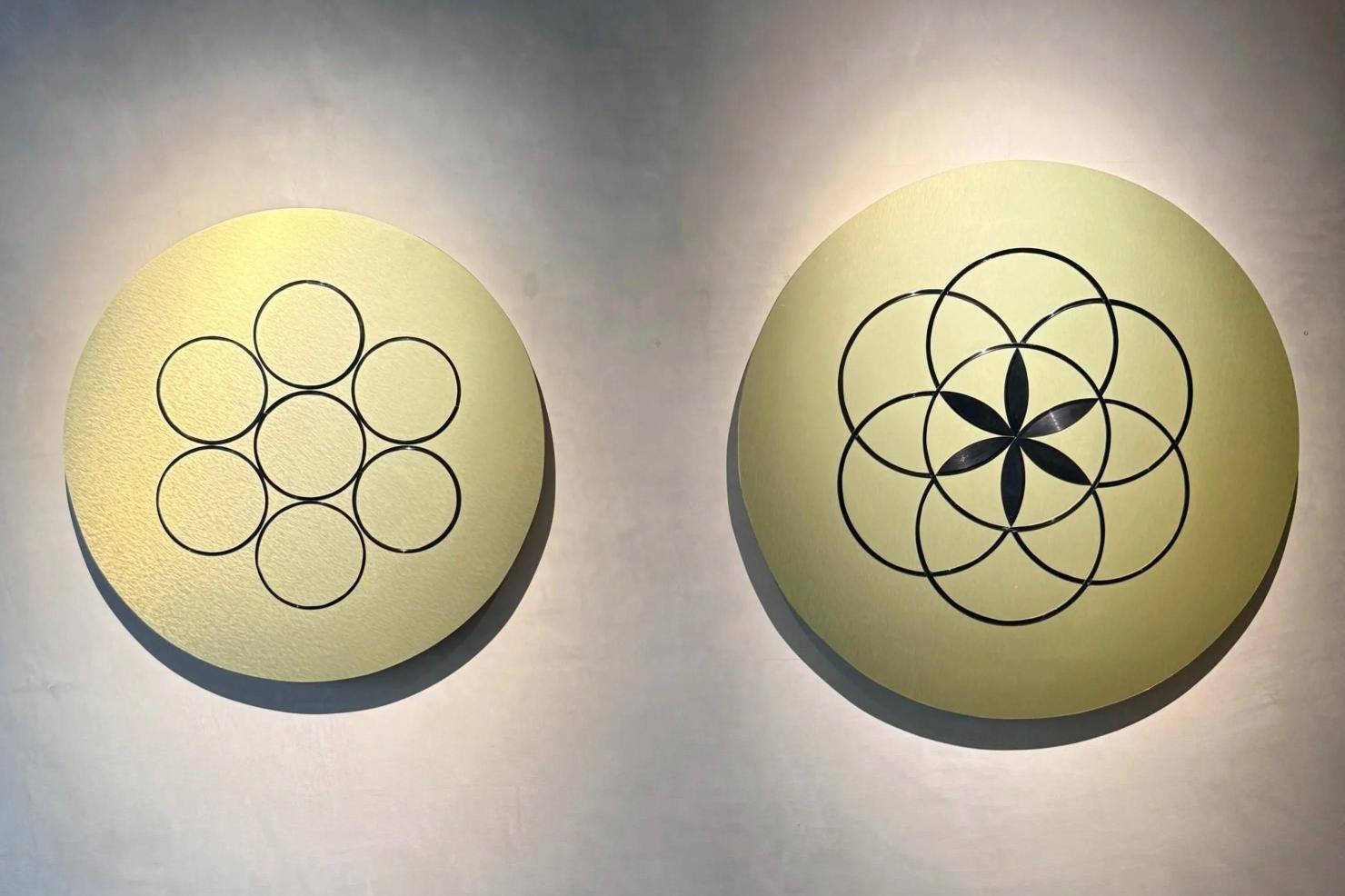
Julio Bekhor reminds us how often certain designs are repeated in the creation of forms, in a perfect blend of mathematical rationality and spiritual elevation. From the circle to the polyhedron, by way of the Flower of Life (Da Vinci, always), Bekhor analyzes the interconnection of vital forms; of planes in all their dimensions, from the unitary point to repetition transformed into composition, so that under our astonished eyes we can glimpse both the notion of space and that of surface. Thus, a tension coexists in the works, that of the struggle between the two-dimensional and the three-dimensional. If vinyl reminds us of Pop Art, the Avant-garde movements are not far removed either, and we better grasp, from the pieces in the exhibition Everything Is Connected, the centuries-long abandonment of Euclidean geometry in the work, a rejection that paved the way for our modernity.
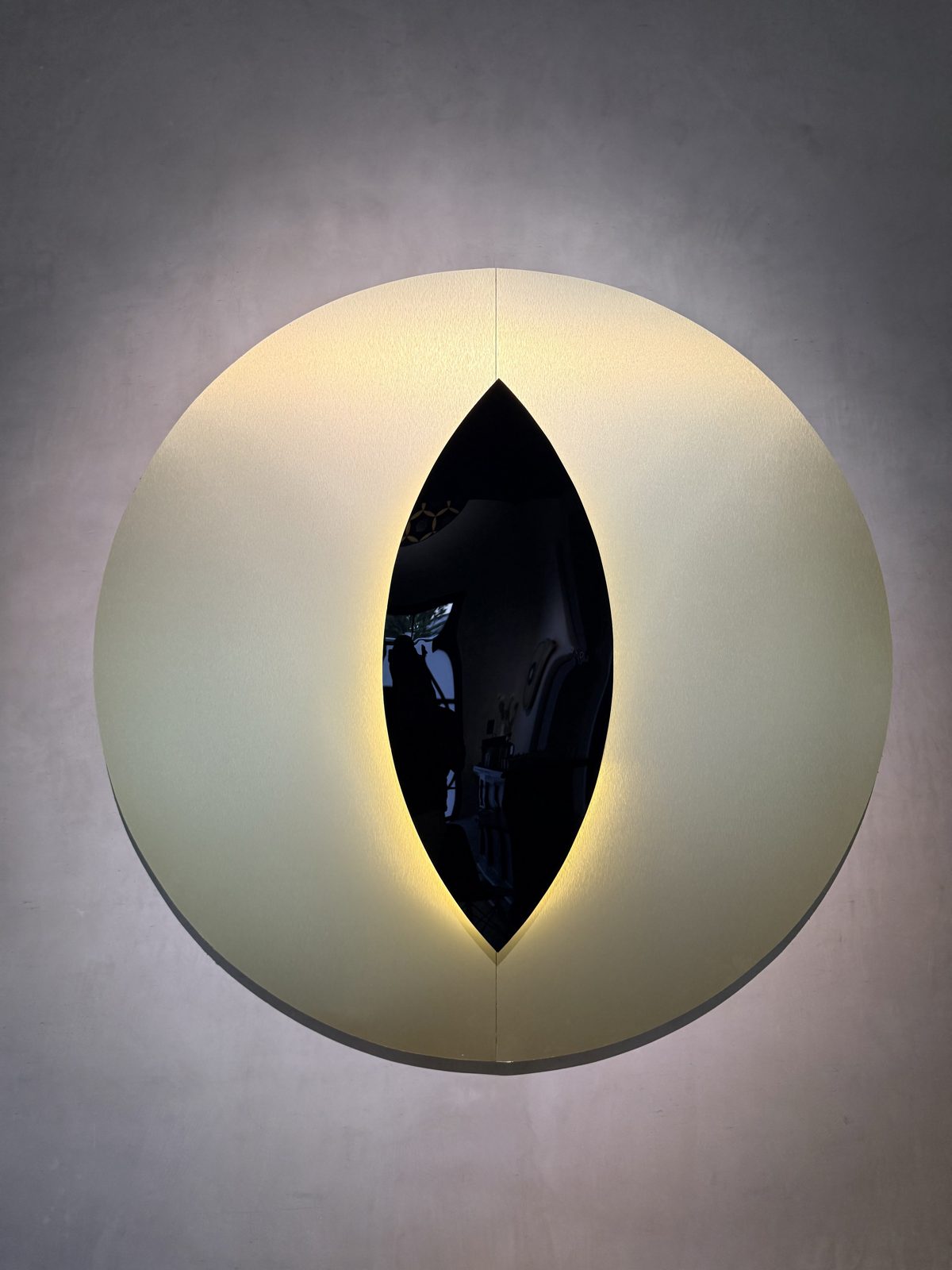
The artist imbues these geometric compositions not with just any elements, but with sacred colors. Gold often contrasts with black. Geometric circles are imbued with mysticism. The quintessential religious symbols disappear, but the creative silence remains. Circles, intersections, and golden infinities murmur, uprooting us from the trivial and allowing us to experience a perception of space transformed into magic.
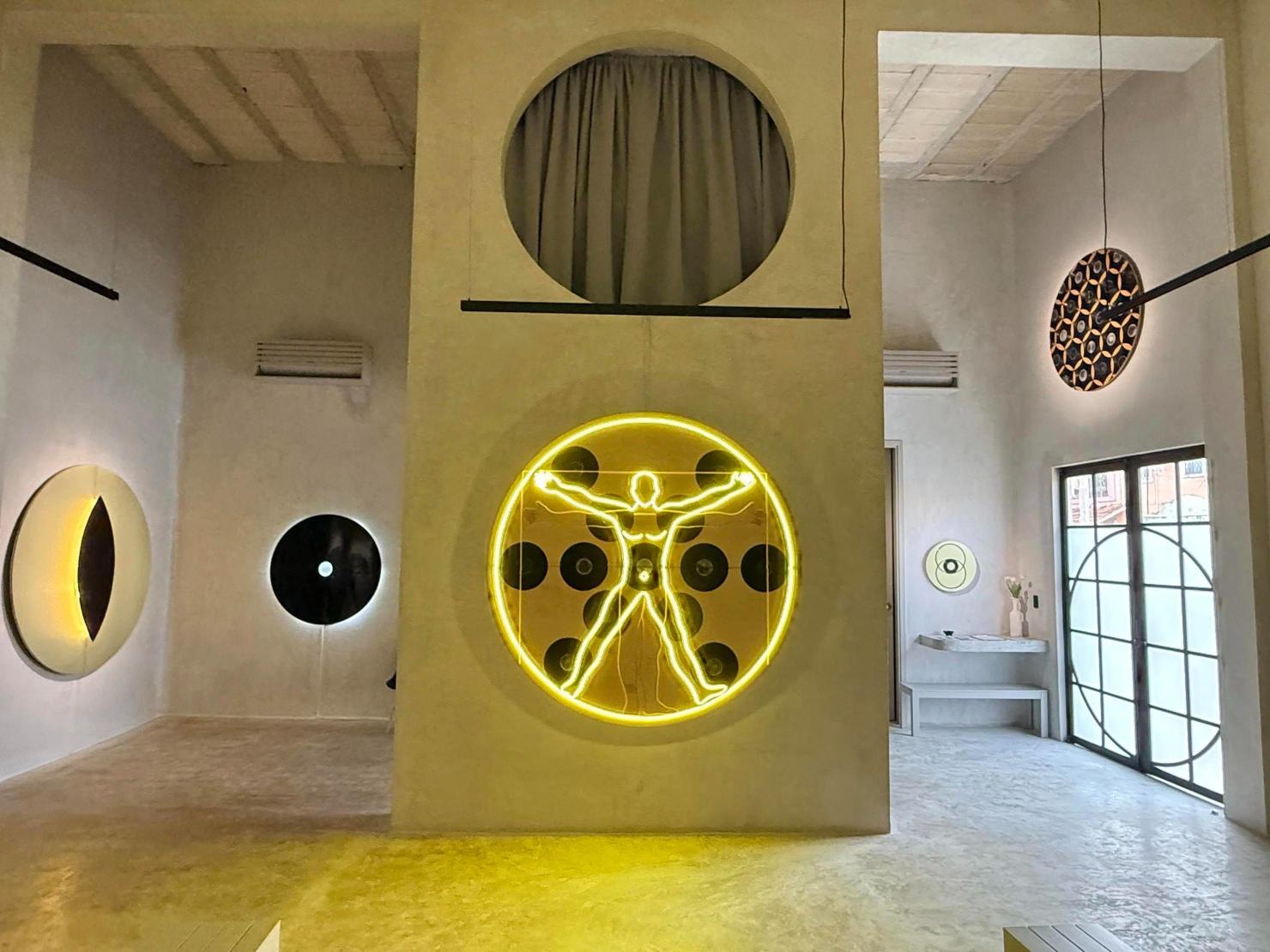
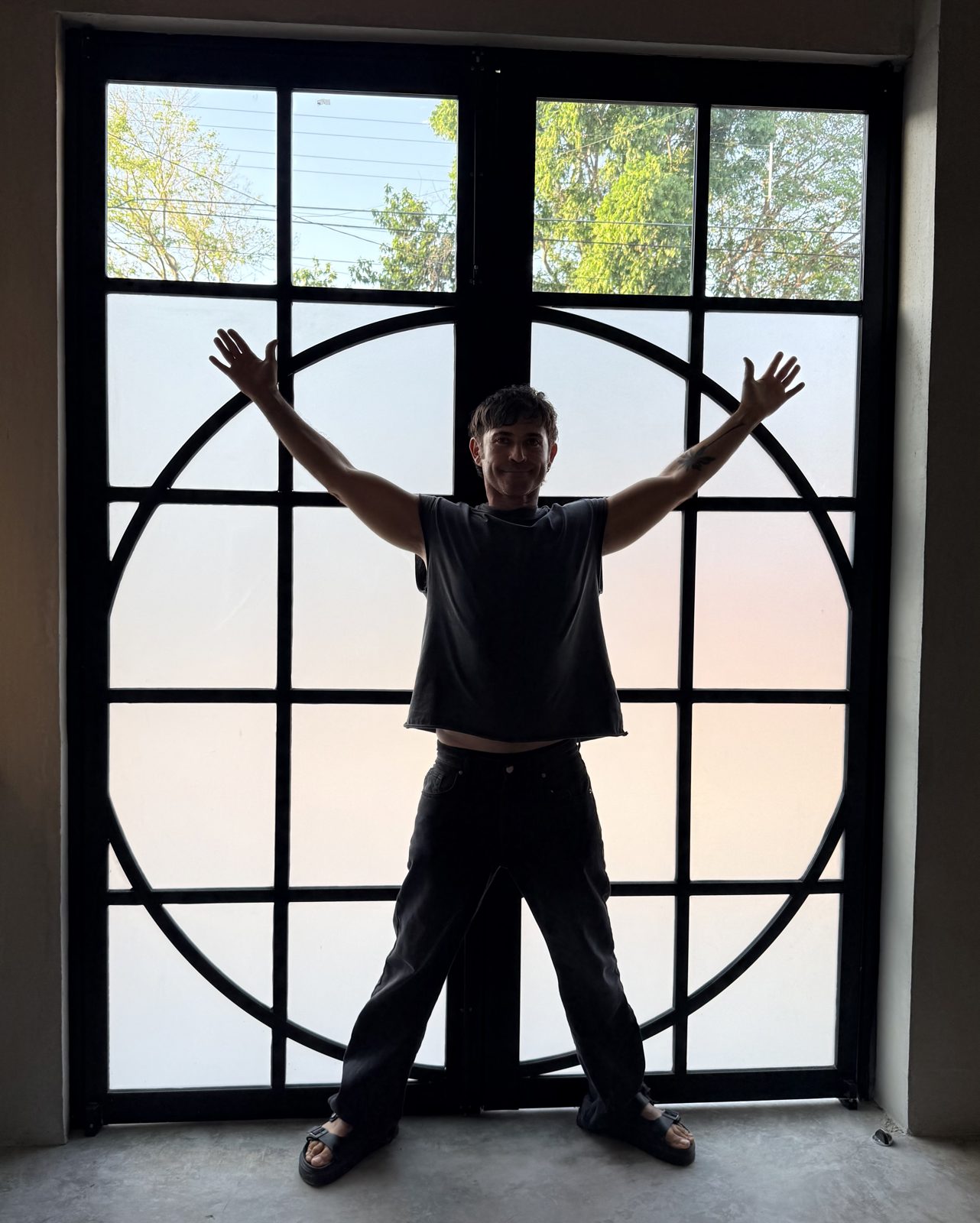
Julio Bekhor’s creative exploration begins with Da Vinci’s Vitruvian Man as the centerpiece of this homage to the essence of art, which the Renaissance paragon summarized with the words saper vedere (knowing how to see), intuiting the current definition of the artist, once again christened the visual artist. Yes, Julio Bekhor knows that the artist is the one who knows how to see. To see their era, the events (Kairos), and to confront them with Time (Kronos), inventing new forms and innovating new materials. Forms and Materials to express the ever-changing world that only the artist can capture. And so, Julio Bekhor’s works in the exhibition Everything Is Connected remind us how essential the proximity of the artwork is in telling us that only art allows us to invent ourselves, to invent our existences.
«Aprende a ver. Comprende que todo está conectado con todo lo demás.» —Leonardo da Vinci
El artista visual Julio Bekhor adoptó esta frase de Leonardo da Vinci. Así, a lo largo de sus más de 25 años de búsquedas plásticas, finalmente, resaltó el elemento geométrico. Lo geométrico es en efecto para nuestro artista el concepto de la representación del Todo, desde el micro hasta el macrocosmos. Bekhor ve en la geometría, y particularmente en el disco, la forma plástica de su alquimia, este ancestro de la ciencia que unía la magia y el estudio de la naturaleza. El sigilo del mundo y de nuestras existencias se vuelven, bajo la mirada de Julio Bekhor, la forma y la materia unida en un círculo de vinil, primer medio de almacenamiento de sonido analógico, herramienta anunciadora de un cambio de época. También ícono de una época, de la música pop, de su amplio consumo y de su injusto pero anunciado abandono. El disco como objeto del pasado, de la fatal lucha entre el progreso y la poesía. El disco como sinónimo de una cierta nostalgia, de la infancia, de la juventud como de los primeros pasos del artista Bekhor en el mundo adulto, en el mundo artístico… Su análisis de lo geométrico, sin embargo, se concentra en el estudio de los patrones y de las formas fundamentales del Universo.
Julio Bekhor nos recuerda cuánto ciertos diseños se repiten en la creación de formas, en una mezcla perfecta entre lo racional matemático y la elevación espiritual. Del círculo al poliedro, pasando por la Flor de la Vida (Da Vinci, siempre), Bekhor analiza la interconexión de las formas vitales; de los planos en todas sus dimensiones, desde el punto unitario hasta la repetición vuelta composición, para que bajo nuestros ojos asombrados podamos entrever tanto la noción del espacio como la de la superficie. Cohabita así en las obras una tensión, la de la lucha entre lo bidimensional y lo tridimensional. Si el vinil nos recuerda al Arte Pop, las Vanguardias no están lejos tampoco y captamos mejor desde las piezas de la exposición Todo está conectado el abandono secular en la obra de la geometría euclidiana, rechazo que abrió paso a nuestra modernidad.
El artista tiñe esas composiciones geométricas no con cualquier elemento sino con colores sagrados. El dorado entra a menudo en contraste con el negro. Círculos geométricos se visten de misticismo. Los símbolos religiosos por excelencia desaparecen, pero el silencio creador permanece. Círculos, intersecciones, infinitos dorados murmullan y logran desarraigarnos de lo trivial, dándonos a tocar la percepción del espacio vuelto magia.
La exploración creadora de Julio Bekhor empieza por el Hombre de Vitruvio del mismo Da Vinci como pieza central de este homenaje a la esencia del arte que el parangón del Renacimiento resumió con las palabras saper vedere (saber ver), intuyendo la actual definición del artista, nuevamente bautizado artista visual. Sí, Julio Bekhor sabe que el artista es quien sabe mirar. Mirar su época, los eventos (Kairós) y enfrentarlos al Tiempo (Kronos) inventando nuevas formas e innovando nuevas materias. Formas y Materias para decir el mundo en permanente cambio que solo el artista logra plasmar. Y así, las obras de Julio Bekhor en la exposición Todo está conectado nos recuerdan cuán esencial es la cercanía de la obra de arte para decirnos que solo el arte nos permite inventarnos, inventar nuestras existencias.
Installation viewsVistas de sala
About the artistSobre el artista
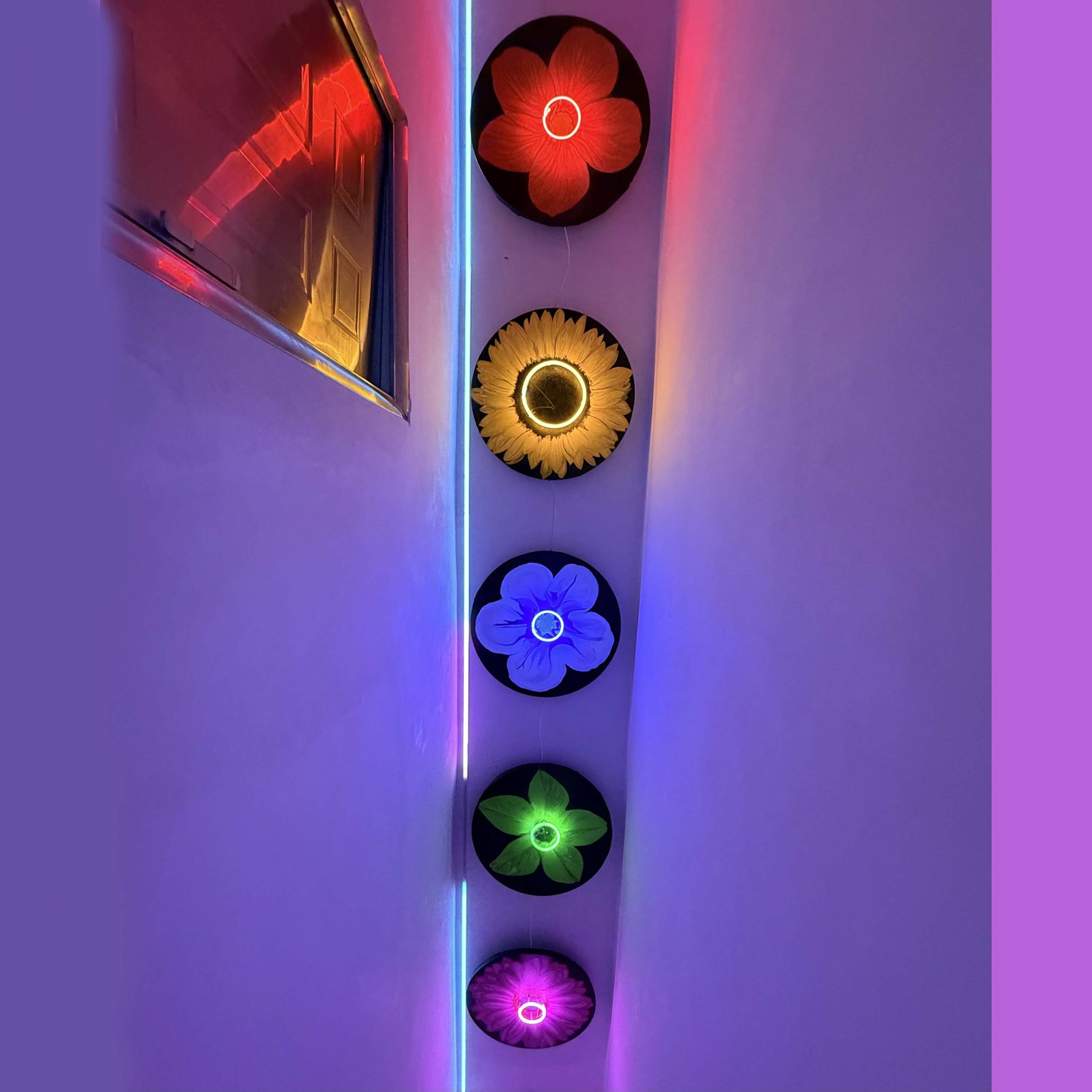
Julio Bekhor (b. 1976) is a multidisciplinary artist who bases his creative exploration on the careful observation of, and concern for, nature. He started experimenting with plastics in 2011, combining techniques and materials like oil paint, vinyl records, LED and neon lights.
His first exhibition, What Goes Around Comes Around, was at Terreno Baldío Gallery in Mexico City in 2014, and the following year his exhibition at Casa Quimera Gallery was part of the Roma cultural corridor for the second consecutive year. In 2026 his neon installation Spark (2014) was part of the Filux México exhibition Solo la luz in Mexico City.
Bekhor directed the film Trippin’ Through Keta and has acted in films including Ella es Ramona and Casi Tr3inta. From a young age his passion for music drove him towards DJing and music production. In his latest exhibition, everything gets connected.
Julio Bekhor (n. 1976) es un artista multidisciplinario que basa su exploración creativa en la observación atenta y el respeto por la naturaleza. Comenzó a experimentar con plásticos en 2011, combinando técnicas y materiales como pintura al óleo, discos de vinilo, luces LED y neón.
Su primera exposición, Lo que va, vuelve, se presentó en la Ciudad de México en 2014 en la Galería Terreno Baldío, y al año siguiente su exposición en la Galería Casa Quimera formó parte del corredor cultural Roma por segundo año consecutivo. En 2026, en la Ciudad de México, su instalación de neón Spark (2014) formó parte de la exposición Solo la luz de Filux México.
Bekhor dirigió el cortometraje Trippin’ Through Keta y participó como actor en diversas películas como Ella es Ramona y Casi Tr3inta. Desde joven, su pasión por la música lo impulsó a dedicarse a ser DJ y a la producción musical. En su última exposición, todo se conecta.